At a Glance:
• Priced per gigabyte: the Guatemala rate is metered, so quiet days on the trail cost you nothing
• Ready before takeoff: scan the QR code on home Wi-Fi and toggle the profile on at La Aurora
• Cities and corridors covered: Guatemala City, Mixco, Villa Nueva, Quetzaltenango and Antigua all sit on solid 4G
• Your WhatsApp stays yours: same number, same chats, no SIM swap anywhere in the process
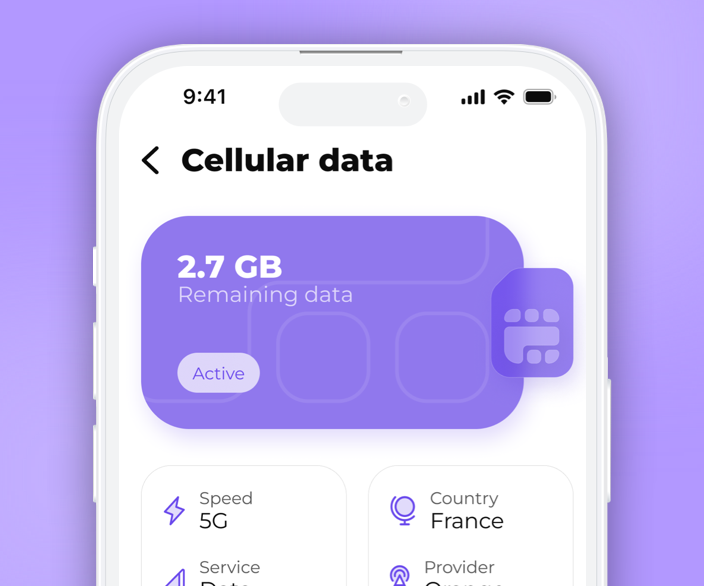
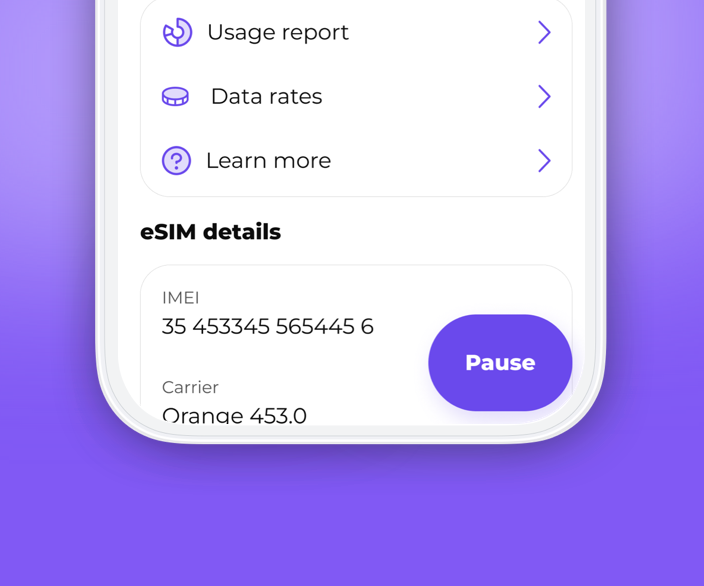
• Steered from the app: live usage meter, instant top-ups and credits that never run out of time
Picture the RN-14 dropping into Antigua: cobbles ahead, a volcano filling the rear window, and a shuttle driver asking which hotel while your map spins on nothing. That is the moment a roaming add-on you never bought starts to hurt. SLYNUMBER sells data by the gigabyte at the Guatemala per-GB rate, so you top up when the balance runs low instead of pre-paying for a bundle that expires. Install it at home. Drive the whole country online.
Networks and coverage across Guatemala
Three host networks sit behind your eSIM here: Tigo Guatemala, Claro Guatemala and Movistar Guatemala. The phone reads signal strength and picks the best of them on its own, tower by tower, the length of the road. You never open a menu to choose.
Speeds to expect: 5G is spreading, if unevenly. Opensignal's Guatemala Mobile Network Experience reporting puts users in Guatemala City, Mixco, Villa Nueva, Quetzaltenango and Antigua on 5G more than 9% of their connected time, averaging above 150 Mbps. Regulator figures from SIT (Superintendencia de Telecomunicaciones) show 4G/LTE reaching over 97% of the population, with suburban speeds of 20–55 Mbps. Off the highways, in the deep highlands and on Petén back roads, plan for less.
Crossing out of Guatemala? The Guatemala per-GB rate applies only while you sit on a Guatemalan network. Head into Mexico, Belize or Honduras and billing moves to that country's own rate, every one of them listed on the SLYNUMBER destinations page. Nothing to reconfigure at the crossing, and your credits roll over untouched.
Will your phone take it? The eSIM runs on iPhone XS and newer, Google Pixel 3 and newer, Samsung Galaxy S20 and newer (carrier-unlocked), plus most eSIM-capable tablets. Check in seconds before you buy: Settings → Cellular → Add eSIM.
1. Pay by the gigabyte, not by the day
A roaming pass charges for time. SLYNUMBER charges for data. On a driving trip where half the day is spent watching volcanoes go past a window, that is a very different bill.
Nothing ticks while the phone sleeps
Spend a day at Semuc Champey with your phone in a dry bag and that day costs you nothing at all. SLYNUMBER counts gigabytes at the Guatemala per-GB rate, so quiet days are free and busy days stay cheap. The running total is in the app whenever you feel like looking.
Leftovers wait for the next trip
Fly home with 2 GB unused and it stays in your account. Credits carry no expiry date, so the balance you bought for an Atitlán week is still sitting there next January, ready for Guatemala again or for somewhere else entirely.
No SIM tray, no airport kiosk
Buy the plan, scan the code on home Wi-Fi, and the install is done. Nothing to prise open with a paperclip at six in the morning. Nothing to queue for on arrival. You land, flip the profile on, and start navigating out of Zona 13.
One profile for a multi-country drive
The same eSIM works in more than 120 countries. If Guatemala is the middle stretch of a longer Central American run, keep the profile and let the price change country by country as you drive. No reinstall at any crossing.
2. What it fixes on a Guatemalan road trip
Rental car, shuttle van, chicken bus, launch across the lake. Every leg brings its own connectivity problem. Here is how metered data handles them.
Rerouting over cobbles and switchbacks
Traffic on the Calzada Roosevelt, the right turn onto the Atitlán rim road, the last passable track up to a finca: live maps solve all three. Keep a cached region on the phone for the highland blanks and let live rerouting take back over the second bars return.
Finding the next comedor
Reviews, opening hours and fuel stops between Cobán and Flores are worth the megabytes. A dozen searches across a long driving day barely registers on a metered plan, and you stop gambling on which roadside kitchen is still serving after dark.
A U.S. number in the glovebox
Pair the eSIM with a SLYNUMBER number and calls, texts and verification codes reach you at the wheel. Your bank dials a normal U.S. line; you answer from a lay-by on the CA-1, and nobody pays international rates for the privilege.
Same eSIM at La Mesilla or El Florido
Driving up to Chiapas or across to Copán? Roll through the crossing and keep the profile exactly as it is. The phone finds a local partner network and bills at that country's published rate, with no stop to buy plastic.
3. Three steps, all done before you collect the keys
Two of them happen on your sofa. The third takes ten seconds in the arrivals hall.
Get the app,
pick a plan
SLYNUMBER is on the App Store and Google Play. Create an account, choose your Guatemala plan, and note the one-time $5 activation fee at checkout. It is the only fixed cost on the whole page.
Scan before
you fly
Point the camera at the QR code in the app, or add the profile manually, while you are still on home Wi-Fi. Install early and the airport becomes a formality.
Toggle on,
drive off
Enable the eSIM in your settings once the wheels touch down. The phone picks the strongest of Tigo, Claro and Movistar, and your route to Antigua loads before the luggage does.
4. The apps you will actually open in Guatemala
Real places, real routes, honest numbers. Here is what each app costs you in megabytes on Guatemalan networks.
WhatsApp from the shuttle seat
Your existing WhatsApp number carries straight over. The eSIM supplies data, not a new identity, so there is no SIM swap and no fresh set of empty chats. Confirm a shuttle pickup in Panajachel, drop a pin at a café in Cuatro Grados Norte, video-call home from an Antigua rooftop at dusk. Voice calls draw roughly 4 to 7 MB per minute and video around three times that, so a week of daily check-ins stays under half a gigabyte. Signal along the CA-1 holds well enough that calls survive the drive, and because the data is yours alone you skip the crowded hostel Wi-Fi that drops calls mid-sentence.
Instagram from Atitlán and Tikal
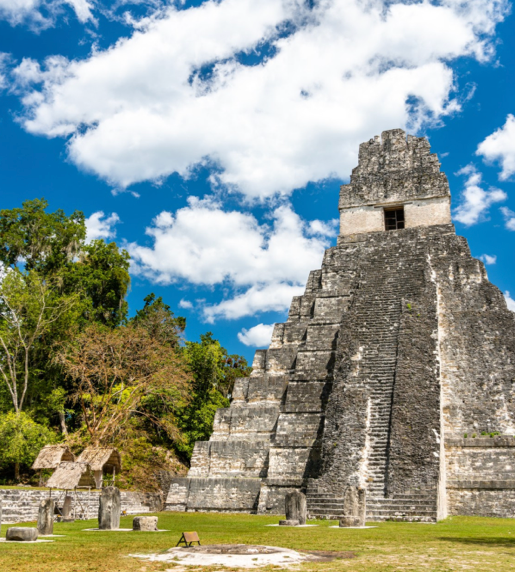
Guatemala packs an unreasonable number of frames into a small map: the Arco de Santa Catalina in Antigua, the lake shore at San Juan La Laguna, Temple IV rising above the canopy at Tikal, sunrise on Acatenango with Fuego smoking next door. City centres and the big sites carry enough 4G to post as it happens instead of batching everything at night. A 60-second Reel upload runs about 55 to 70 MB, a photo carousel far less, so one post a day fits inside roughly 2 GB across a week. One practical note: signal thins deep inside Tikal National Park, so write the caption on the trail and let it publish near the entrance.
TikTok without hunting for Wi-Fi
The clips that travel here are specific ones: the RN-14 descent with Agua filling the windscreen, Thursday market colour at Chichicastenango, giant kites going up at Sumpango on All Saints' Day, a Semana Santa procession turning a corner in Antigua under a carpet of sawdust. A standard upload costs somewhere between 30 and 90 MB depending on length and resolution, which metered data absorbs without drama. In packed crowds the eSIM keeps hopping between Tigo, Claro and Movistar, so uploads keep moving when one network jams. Check the running total in the SLYNUMBER app if a long bus ride turns into a scrolling session.
Maps, the app that earns the plan
Navigation is where the gigabytes pay for themselves. Live traffic tells you whether the Transmetro or a taxi wins across Guatemala City at five in the afternoon. Turn-by-turn gets you west on the CA-1 to Quetzaltenango, around the Atitlán rim to Santiago, and up the long haul to Río Dulce and Petén. Before the patchy ground, the highlands around Chichicastenango or the jungle roads near Flores, download the offline map of Guatemala first: a one-time hit of roughly 255 MB. Live rerouting and arrival times resume by themselves when bars return. Day-to-day navigation otherwise sips under 5 MB an hour.
Best eSIM for Guatemala
Under two minutes of video, then you can do the whole thing yourself.
The full sequence on screen: buying a Guatemala plan, scanning the QR code, and coming online on a local network after touchdown.
6. SLYNUMBER against the usual options
A local plastic SIM, a carrier roaming pass, a burner app, SLYNUMBER. Each gets something right and something badly wrong once you are actually on the road with a schedule to keep. The table lines them up on the three things that decide a trip: whether verification codes land, whether you can predict the cost, and whether your number survives the journey.
| Feature |
SLYNUMBER |
Google Voice |
Burner Apps |
Carrier 2nd line |
| Real U.S. mobile number | Yes | No | Varies | No |
|---|
| SMS verification for apps | Yes | Limited | Often blocked | Yes |
|---|
| Immune to SIM swapping | Yes | Yes | Yes | No |
|---|
| Custom voicemail | Yes | Yes | Rarely | Yes |
|---|
| International calling | Yes | Limited | Rarely | Carrier dependent |
|---|
| eSIM / Data plans | Yes | No | No | Carrier dependent |
|---|
| Number permanence | Permanent | Permanent | Temporary | Permanent |
|---|
| Requires carrier number | No | Yes | Varies | Yes |
|---|
| Starting price | $14.99 / 3 months | Free | $2–$5/week | $10–$15 add-on |
|---|
7. What you get, and what it costs
In the package
The eSIM moves your data. The SLYNUMBER number carries your identity. Between them:
- eSIM data on a single profile across 120+ countries
- A genuine U.S. mobile number that carriers do not flag as VoIP
- Number service you can use from 150+ countries
- TLS and SRTP encryption on calls and messages
- Credits with no expiry, however long the gap between trips
- Live usage, instant top-ups and plan switches inside the app
- The SlyAI assistant, built in
Signup checks that reject burner numbers wave this one through: WhatsApp, Telegram, PayPal, Venmo, Instagram, Snapchat, Amazon and Gmail all treat it as an ordinary U.S. mobile line.
On security
Calls travel over SRTP and everything else over TLS. With no physical SIM anywhere in the equation, the standard SIM-swap play has nothing to lift.
The numbers
Two cycles and one credit pack. That is the entire menu:
- Quarterly — $4.99 a month, billed $14.99 every 3 months
- Annual — $49.99 paid once for the year
- Credits — $10 for 1,000, where one credit is a call minute, an SMS or an MMS
Where to find it
Download the SLYNUMBER app from the App Store or Google Play. One login covers your eSIM data, your U.S. number and your credit balance, with SlyAI answering the things you would rather not dig through menus for.
8. Guatemala eSIM: your questions answered
Mostly, yes. Guatemala moves by road, not rail, since FEGUA's passenger trains are long dormant. The Inter-American Highway (CA-1) west toward Quetzaltenango, the RN-14 drop into Antigua and the CA-9 run out to Puerto Barrios all sit inside the Tigo, Claro and Movistar footprints, and your eSIM grabs whichever tower is strongest. Expect steady 4G in the towns and along the main corridors. Expect short blanks on the climbs near Sumpango and on gravel above Chichicastenango. Cache your offline maps first and those gaps stop mattering.
Yes, and one profile covers the whole route. Cross at La Mesilla or Tecún Umán into Mexico, at Melchor de Mencos into Belize, or at El Florido on the way to Copán in Honduras, and your phone re-registers on a supported local network within about a minute. Billing simply moves to that country's own per-GB rate, published on the SLYNUMBER destinations page. No second eSIM. No new QR code. No APN edits at the border booth. Leftover credits ride along with you and never expire.
Three to five gigabytes covers most eight-day loops. Navigation, WhatsApp and a few photo uploads land under 300 MB a day. Add nightly Instagram posts from Panajachel and a long video call home from Flores and you drift toward 4 GB. Stream music on every drive, hotspot a laptop in Antigua, and 8 GB is realistic. Buy small, watch the live meter in the app, top up when the balance dips. You pay the Guatemala per-GB rate rather than a bundle, so nothing goes to waste.
A real U.S. mobile number that lives in the SLYNUMBER app instead of on a plastic SIM. Networks read it as an ordinary mobile line rather than a VoIP line, so WhatsApp, Telegram, PayPal, Venmo, Instagram, Snapchat, Amazon and Gmail all accept it. Call and text over any data connection. Keep your home number off rental paperwork and signup forms. Pick the line up in more than 150 countries. Choosing one in the app takes a couple of minutes.
Burner apps hand out recycled VoIP numbers, and verification systems have learned to bounce them, so the code never lands and the signup dies. SLYNUMBER issues a genuine U.S. mobile number that clears those checks like any domestic line. It also stays yours while the plan runs, so contacts, accounts and message history survive the trip instead of evaporating when a temporary number expires. Treat it as a permanent second line you happen to carry abroad.
Two cycles. Quarterly works out to $4.99 a month, billed as $14.99 every three months. A full year paid upfront is $49.99. Calls and messages run on credits: $10 buys 1,000, and one credit equals a call minute, an SMS or an MMS. Credits never expire, so a light talker can stretch a single pack across several trips. No contract, no cancellation maze, nothing buried in small print.
It removes the usual opening. SIM-swap crews work by talking your home carrier into moving your primary number onto their SIM. A SLYNUMBER line has no SIM card to port and no shop counter to sweet-talk, because it sits behind your app login with TLS and SRTP encryption protecting the traffic. Point your bank, your exchange and your email recovery at the SLYNUMBER number, keep your personal number private, and that attack path closes.
Yes. It is a real U.S. mobile line, so SMS codes from banks, brokerages, crypto platforms and everyday apps arrive normally, including the ones VoIP numbers routinely drop. Request a code while you are parked in Antigua, read it in the app, log in. Plenty of travelers make it their permanent verification number for exactly that reason: it follows the data connection, not the country you happen to be standing in.
It does. The number runs entirely on data, so with your eSIM riding Tigo, Claro or Movistar you can take a call at a fuel stop on the CA-1, answer a text from the Atitlán shore road, or confirm a hotel from the Petén jungle. People back home dial a normal U.S. number and pay nothing unusual. You answer in the app. Hotel Wi-Fi handles it too when you would rather save gigabytes.