The Short Version:
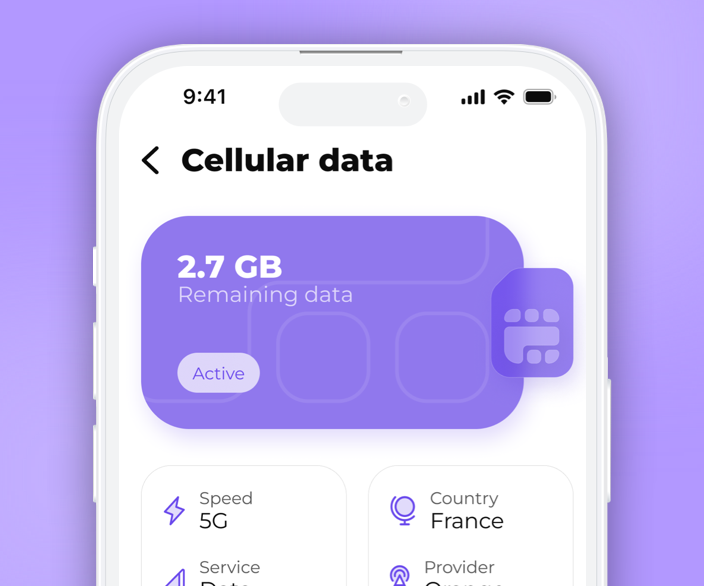
• Billed per gigabyte: You pay the Belgium per-GB rate for what you actually use — no bundles, no contracts, no roaming line on your home bill.
• Three Belgian networks: The eSIM auto-selects between Proximus, Orange Belgium, and BASE (Telenet), wherever the train stops.
• Rail-proof: The IC corridors linking Brussels, Antwerp, Ghent, and Bruges hold steady 4G, with 5G around the major stations.
• Ready before departure: Install by QR code at home on any eSIM-capable iPhone or Android — two minutes, done.
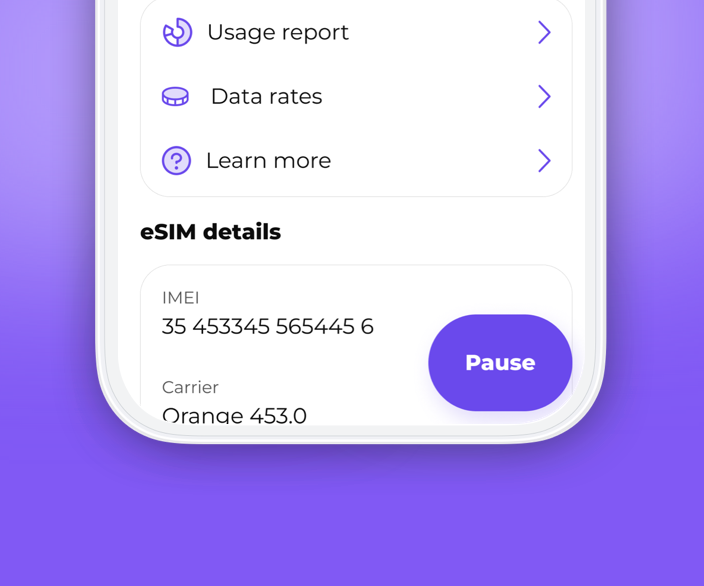
• Nothing expires: Credits and leftover data wait in your balance for the next border, or the next trip entirely.
The 09:04 to Bruges pulls out of Brussels-Midi. Flemish fields flick past the window. Fifty-eight minutes from now you'll be standing on a medieval square. Belgium is built for exactly this — a country where every great city sits one short train from the next. SLYNUMBER's eSIM matches the pace: pay-as-you-go data on all three Belgian networks, installed by QR code before you've even bought a rail pass. No roaming charges. No kiosk queues. Just signal, city after city.
Networks and coverage in Belgium
Your three carriers: SLYNUMBER's Belgium eSIM rides Proximus, Orange Belgium, and BASE (Telenet). The phone tests all three and locks onto the strongest — you never open a network menu, not even between stations.
How fast is it, really? Quick. Opensignal's Belgium reporting has users in Brussels, Antwerp, Ghent, Bruges, and Liège on 5G more than 27% of their connected time, with average 5G downloads above 215 Mbps. The regulator BIPT puts 4G/LTE past 99% of the population, at 45–95 Mbps in the suburbs.
Over the border: The Belgium rate applies while a Belgian network carries your data. Step into the Netherlands, France, Luxembourg, or Germany and the eSIM re-bills at that country's own rate — the full list lives on the SLYNUMBER destinations page. Credits roll over; settings stay exactly as they were.
Device check: The eSIM runs on iPhone XS onwards, Google Pixel 3 onwards, and Samsung Galaxy S20 onwards (carrier-unlocked), plus most tablets with eSIM support. Confirm yours in ten seconds: Settings → Cellular → Add eSIM.
1. Why rail travelers pick an eSIM for Belgium
Roaming passes and airport SIM stands were built for a different kind of trip. Here's what changes when your data goes pay-as-you-go.
Pay for gigabytes the way you pay for rides
No bundle to guess at. No monthly allowance quietly running out mid-trip. SLYNUMBER meters your usage at the Belgium per-GB rate and stops there. Burn a lot on museum day, almost nothing on hiking day — the bill follows reality either way. Whatever you don't use stays in your balance, ready for the next border or the next journey entirely. Buying data starts to feel like buying train tickets: exactly as many as you need, none as decoration.
Your home carrier never hears about this trip
Roaming add-ons ambush you twice — once with the daily fee, once with the fine print. Skip both. The eSIM puts your phone on Belgian networks directly, as local data, at a rate you saw before you paid. Your home SIM can stay in the phone for calls if you like; it simply never touches data here. Next month's bill arrives with nothing to explain and nothing to dispute.
Sorted before you've chosen a suitcase
Buy the plan, get a QR code, scan it from your sofa. Done — the profile waits, silent, until you flip it on in Belgium. There's nothing to collect at an arrivals counter and no delivery to track. The one-time $5 activation fee at first install is the only charge beyond the data itself. Most people finish the whole thing before the kettle boils.
Built for the trip after this one
Belgian rail has a habit of turning one country into four — Paris is 82 minutes from Brussels-Midi, Amsterdam under two hours, Cologne not much more. Your eSIM doesn't blink at any of it. The same profile connects in 120+ countries, re-attaching to local host networks at each border and billing each country at its own published rate. Install once, and every future itinerary starts already online.
2. One eSIM for every Belgian route
Whether you're stringing cities together or heading for the hills, here's how the connection behaves along the way.
Brussels, Ghent, Bruges, Antwerp — back to back
This is the classic loop, and it's absurdly easy: no leg takes much over an hour. Your eSIM switches between Proximus, Orange Belgium, and BASE as the scenery changes, so the connection follows you from carriage to platform to café. Book the next leg from your seat. Check the Belfry's opening hours as you roll into Bruges. The short tunnels around Brussels' North–South link are the only regular blackout — and they're over in a minute.
Capital days, connected end to end
Brussels rewards slow exploring — the Grand Place at dawn before the tour groups, the Sablon's chocolatiers, comic-strip murals ambushing you around corners, the Atomium out at Heysel. Coverage from all three networks is dense across the city, and the metro, trams, and pre-metro tunnels are well served. Use data casually here: tram times, museum tickets, a table in the Marolles. This is the easiest connectivity of your whole trip. Spend it freely.
From the Kusttram to the deep green south
Belgium's edges are where signal gets interesting. Along the coast, the Kusttram runs 67 km from Knokke to De Panne — the world's longest tram line — with solid coverage the entire ride. The Ardennes are wilder: Dinant's citadel and the Meuse valley connect fine, but forest roads and river gorges can drop to 3G or nothing at all. Save offline maps before you head south. The eSIM reconnects the moment the trees thin out.
Four borders, none of them your problem
Belgium touches France, Luxembourg, Germany, and the Netherlands, and high-speed trains leave for all of them from Brussels-Midi. Cross any border and the eSIM finds a local host network within moments; billing moves to that country's per-GB rate, listed on the destinations page. No new QR code, no settings, no thought required at all. Day-trip to Lille, overnight in Luxembourg City — one data balance funds the whole map.
3. Online in three stops
Two steps at home, one on arrival. The whole thing takes less time than finding your platform at Brussels-Midi.
Grab the app,
pick a Belgium plan
Download SLYNUMBER from the App Store or Google Play and choose your Belgium data plan. A one-time $5 eSIM activation fee is added at checkout — after that, it's only the per-GB rate.
Scan the QR,
install at home
Still on your home Wi-Fi, scan the QR code from the app — or key the details in manually. The profile installs in about two minutes and sleeps until Belgium.
Land, toggle,
you're online
Switch the eSIM on in your settings when you arrive. Your phone grabs Proximus, Orange Belgium, or BASE — whichever mast is loudest where you stand.
4. Your apps, running on Belgian signal
Same apps, better backdrops. Here's what each one actually consumes — real numbers, so you budget in gigabytes instead of guesses.
Your number rides along
Your WhatsApp number stays put. The eSIM only swaps the data underneath it — chats, groups, and call history all untouched. Video-call your family from a window seat between Ghent and Bruges. Drop a pin at the Grand Place so friends can find you under the gables. Voice-note from the MAS rooftop in Antwerp while the Scheldt glitters below. Budget-wise, relax: a WhatsApp voice call takes about 3–6 MB per minute, so a week of evening check-ins costs a few hundred megabytes at most. One tip — switch off media auto-download. Belgian group chats love photos, and your gigabytes have better places to be.
Stories from the square, not the hotel
Bruges at golden hour does not wait for hotel Wi-Fi. Post it live. Story the swans at Minnewater, reel the Graslei terraces in Ghent as the lights come on, go live from the top of the Belfry with the whole Markt spread below. A 60-second 1080p Reel uploads in roughly 60–80 MB; a full day of Stories rarely passes 30 MB. Signal holds where the crowds gather — Proximus, Orange Belgium, and BASE all run strong 4G through the historic centres, with 5G spreading fast. Museum basements can drop a bar; Instagram keeps your drafts saved locally, so the shot survives. Upload from the next square over.
Film the alley, post from the platform
Belgium is short distances and strange details — perfect TikTok country. Walk-and-talk through the Marolles flea market before the dealers pack up. Time-lapse the trains sliding into Antwerpen-Centraal, the most cinematic station in Europe. Catch frietkot culture at midnight in Ghent. Uploads run 35–95 MB for a standard 60-second clip; the For You feed is the real spender at roughly 600 MB an hour, so scroll with one eye on the SLYNUMBER app's live usage meter. In festival crowds — Rock Werchter in July, the Gentse Feesten filling Ghent's streets — the eSIM quietly re-picks the least congested network. Your clip goes up while the moment is still warm.
Navigate platforms, cobbles, and forest roads
Rail travel in Belgium is mostly navigation: which platform at Brussels-Midi, which exit at Liège-Guillemins, which cobbled lane bends toward the Rozenhoedkaai. Live maps handle all of it on a trickle — turn-by-turn guidance uses well under 10 MB an hour. Trace the Kusttram line along the coast from Ostend, find a table away from the tourist traps of the Rue des Bouchers, check real-time SNCB departures before you finish your coffee. Heading deep into the Ardennes toward Dinant or La Roche? Save an offline map first — all of Belgium fits in around 220 MB — and the eSIM picks the route back up the moment signal returns.
Best eSIM for Belgium
One short video, and the setup has no surprises left.
See the whole flow — buying the Belgium plan, scanning the QR code, and watching the phone latch onto a Belgian network — before you spend a cent.
6. SLYNUMBER next to the alternatives
Second SIM cards, burner apps, plain VoIP numbers — each covers a slice of what travelers need. The comparison below sets them against SLYNUMBER's pairing of a genuine U.S. mobile number with metered eSIM data: who passes verification, who survives a SIM-swap attempt, whose balance expires, and who crosses borders without fuss.
| Feature |
SLYNUMBER |
Google Voice |
Burner Apps |
Carrier 2nd line |
| Real U.S. mobile number | Yes | No | Varies | No |
|---|
| SMS verification for apps | Yes | Limited | Often blocked | Yes |
|---|
| Immune to SIM swapping | Yes | Yes | Yes | No |
|---|
| Custom voicemail | Yes | Yes | Rarely | Yes |
|---|
| International calling | Yes | Limited | Rarely | Carrier dependent |
|---|
| eSIM / Data plans | Yes | No | No | Carrier dependent |
|---|
| Number permanence | Permanent | Permanent | Temporary | Permanent |
|---|
| Requires carrier number | No | Yes | Varies | Yes |
|---|
| Starting price | $14.99 / 3 months | Free | $2–$5/week | $10–$15 add-on |
|---|
7. What you get, what you pay
Everything in the box
One plan. No tiers. This is the full list.
- A real U.S. mobile number — no VoIP flag, so verification texts actually arrive
- Number usable from 150+ countries; eSIM data live in 120+
- Data metered per gigabyte at each destination's published rate
- Credits and data with no expiry — balances roll into the next trip
- Signal-based auto-selection between Proximus, Orange Belgium, and BASE while you're in Belgium
- SlyAI assistant inside the app for setup and account help
- Live usage tracking, instant top-ups, and plan switches from your phone
To WhatsApp, Telegram, PayPal, Venmo, Instagram, Snapchat, Amazon, and Gmail, a SLYNUMBER number reads as an ordinary U.S. mobile line — so registrations and SMS codes behave exactly the way they do at home.
Security
TLS encrypts the connection; SRTP secures the calls. And since no physical SIM exists, the standard SIM-swap play — porting your number away through a carrier help desk — has no target. Your app login is the only door in.
Pricing
Number, usage, and data are billed separately, so nothing subsidizes anything. Data always follows the per-GB rate of the country you're standing in, plus a single $5 activation fee the first time you install.
- $4.99 a month on the quarterly cycle — charged as $14.99 every three months
- $49.99 for the annual plan
- 1,000 credits for $10 — one credit is a call minute, an SMS, or an MMS
App & devices
SLYNUMBER ships on the App Store and Google Play with the SlyAI assistant built in. eSIM support covers iPhone XS onwards, Google Pixel 3 onwards, Samsung Galaxy S20 onwards (carrier-unlocked), and most tablets with eSIM. Quick check: Settings → Cellular → Add eSIM.
8. Belgium eSIM — quick answers
Almost the whole way, yes. The IC lines linking Brussels, Antwerp, Ghent, Bruges, and Liège run through territory all three host networks cover, and your eSIM re-attaches to the strongest one as the train moves. Brussels to Antwerp takes barely 40 minutes; expect steady 4G with 5G around the big terminals. The North–South tunnel under central Brussels and a few Ardennes valleys will cost you a minute of signal. Queue your podcast before boarding and you'll never notice.
No. Same eSIM, same app, nothing to reinstall. While a Belgian network carries your data you pay the Belgium per-GB rate; cross into the Netherlands, France, Luxembourg, or Germany and billing flips to that country's own listed rate by itself. Every rate sits on the SLYNUMBER destinations page. Your credits travel with you and never expire — data bought for Bruges works just as well in Paris next week.
Plan on 3–4 GB and you'll have headroom. Maps and messaging alone barely reach 1 GB over five days. Add daily Stories from Ghent and Bruges, music on the trains, and a nightly video call home, and you'll sit around 2.5–3.5 GB. Streaming video every evening pushes past 6 GB. A wrong guess costs nothing here — you're billed the Belgium per-GB rate for what actually left your phone, not for a bundle you sized in advance.
A real U.S. mobile number that lives in the app, not on plastic. It carries no VoIP flag, so services treat it as a normal line: WhatsApp, Telegram, PayPal, Venmo, Instagram, Snapchat, Amazon, and Gmail all accept it for signups and verification texts. Call, text, and receive codes from 150+ countries. Keep it for years — it doesn't care where the trains take you.
No — and the difference shows up at verification time. Burner services recycle VoIP numbers that platforms learned to block years ago; codes bounce, accounts get flagged. SLYNUMBER assigns genuine U.S. mobile lines that clear those checks, and it's designed as a keeper: your number, contacts, and message history stay intact for as long as you hold the plan. A burner hides you once. This one works every single day.
Short list. The number: $4.99 a month on the quarterly cycle — $14.99 charged every three months — or $49.99 for a full year. Calls and texts draw on credits: $10 buys 1,000, and each one covers a minute of calling, an SMS, or an MMS. Credits never expire. eSIM data is separate, metered at each country's per-GB rate, with a one-time $5 activation fee on your very first install. That's the whole price list.
There's nothing to swap. The classic attack talks a carrier's help desk into porting your number onto a stranger's SIM card — but this number has no SIM card and no help desk to charm. It exists behind your authenticated app login, with TLS and SRTP encrypting the traffic. Verification codes land on your screen and nowhere else. For 2FA, that's a stronger position than any piece of plastic.
Yes, in seconds. Your U.S. number receives SMS inside the SLYNUMBER app over any data connection — the Belgium eSIM, hotel Wi-Fi, a station's free network. Banks, PayPal, Gmail, Amazon: their codes don't know or care that you're standing on a platform in Ghent. Keep two-factor switched on everywhere. A locked account at midnight is a home problem now, not a travel problem.
Nothing. The eSIM profile stays on your phone and connects in 120+ countries whenever you next set off; the U.S. number keeps working from 150+ countries over any data connection. Leftover data and credits sit in your balance indefinitely — no expiry dates, no use-it-or-lose-it. Your next trip starts with everything already in place. One install really is the last install.