Before You Sail:
• Metered from the first megabyte: the Panama rate charges gigabytes used, never days elapsed
• Live before immigration: the QR code is scanned at home, so arrivals is just a toggle
• Capital and coast alike: Panama City, San Miguelito, Tocumen, David and Arraiján all run on strong 4G
• One WhatsApp identity: your existing number keeps working, with no swap and no second account
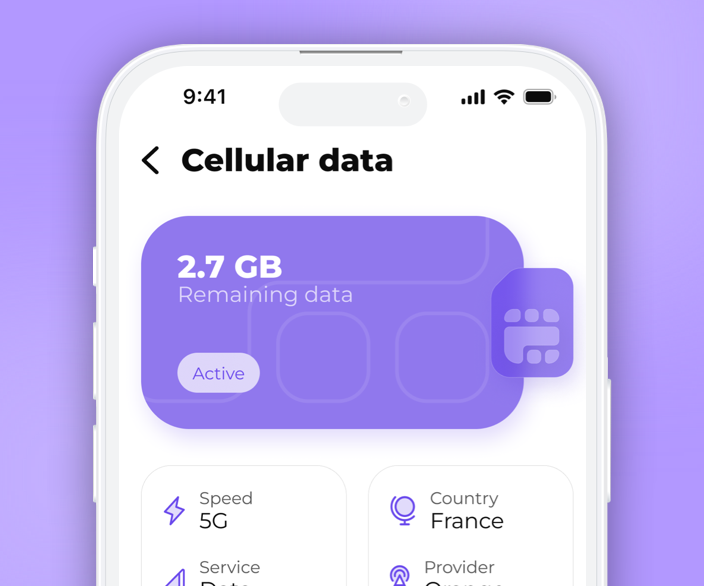
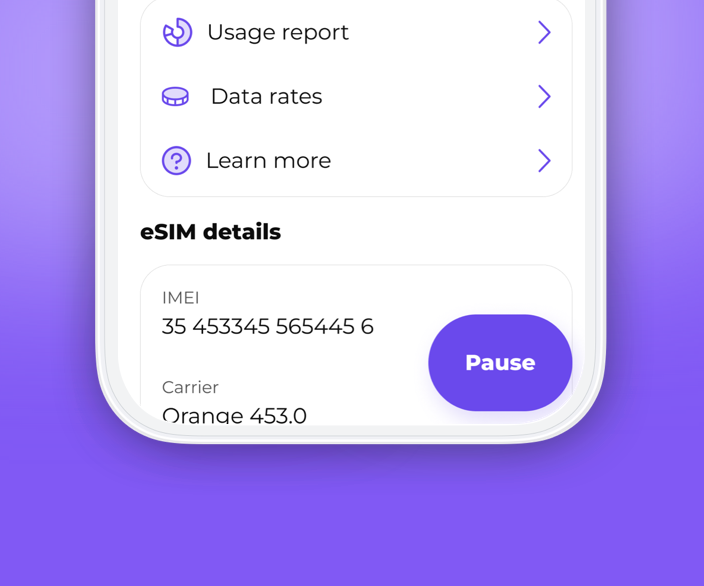
• Run from your phone: usage meter, one-tap top-ups and credits that never time out
You clear immigration at Tocumen at half past six in the morning. The taxi rank is already moving, your ride-hailing app wants a connection, and the airport Wi-Fi is asking for a phone number you would rather not hand over. A live eSIM deletes that whole scene. SLYNUMBER meters data at the Panama per-GB rate, so a single balance covers the taxi, the canal locks, the flight to Bocas and the water taxi back, and you refill only when the app says the tank is low.
Host networks and real-world coverage in Panama
Your eSIM rides on +Móvil (Cable & Wireless / Liberty), Tigo Panama and Claro Panama. Selection is automatic and continuous: as you move between the capital, the interior and the coast, the handset keeps re-checking signal strength and hands itself to whichever of the three is strongest.
How fast, realistically? Panama leads much of the isthmus on 5G. Opensignal's Panama Mobile Network Experience reporting has users in Panama City, San Miguelito, Tocumen, David and Arraiján on 5G for more than 15% of their connected time, averaging above 170 Mbps. The regulator ASEP (Autoridad Nacional de los Servicios Públicos) puts 4G/LTE at over 98% of the population, with suburban speeds between 28 and 65 Mbps. The honest exception: the Darién, the outer Bocas islands and the upper slopes of Volcán Barú stay patchy.
Sailing or driving onward? The Panama per-GB rate is charged while you sit on a Panamanian network and nowhere else. Continue to Costa Rica, to Colombia or out to the Caribbean island nations, and each bills at its own published rate on the SLYNUMBER destinations page. Credits cross borders with you, and no setting changes hands.
Device checklist: iPhone XS and newer, Google Pixel 3 and newer, Samsung Galaxy S20 and newer in carrier-unlocked form, plus most eSIM-capable tablets. Unsure about yours? Open Settings → Cellular → Add eSIM before buying anything.
1. The case against a roaming pass
Roaming passes are sold by the day, which suits carriers and nobody else. A coastal itinerary is lumpy: two heavy days in the capital, three quiet ones on an island. Metered data matches that shape.
Provisioned before you leave the house
The install happens at your kitchen table: buy, scan, finished. No queue at an arrivals kiosk, no passport photocopy for a prepaid SIM, no tray to open on a moving bus. The profile simply waits on the phone, switched off, until the day you need it.
The invoice matches the week you had
Days spent snorkelling do not generate traffic, and a metered plan knows it. You are charged the Panama per-GB rate for gigabytes that genuinely moved, which is why quiet days cost almost nothing and no allowance goes unused.
Valid in 120+ countries, not only this one
Panama is often the first or last stop on something larger. The same profile works in more than 120 countries, so a Caribbean loop or a hop over to Cartagena needs no new hardware, only a different per-GB rate.
Nothing on the clock
An unused balance is not lost value. Credits stay in the account indefinitely, which makes it sensible to buy modestly and top up mid-trip rather than over-buying on day one and hoping to use it all.
2. Where the eSIM earns its keep on the coast
Port days, ferry crossings, a night in Casco Viejo, a flight out to the archipelago. Four moments when carrying your own connection changes the day.
Off the ship and straight into the city
Port calls are short and the clock is unforgiving. With data already live at Colón 2000 or Fuerte Amador you can order a car, check visiting hours at the Miraflores Locks and reserve a table in Casco Viejo before the tender queue has even cleared.
Almirante, Bocas and the crossings between
Water-taxi times shift with weather and demand. A live connection lets you confirm the next departure from Almirante to Isla Colón, warn the hostel you are running late, and read the forecast for the run out to Bastimentos. Signal is good at both docks, thinner mid-channel.
Rebooking without a hotel lobby computer
Boats fill up, domestic flights get shuffled, and the good places in Boquete sell out by Friday. Being online means you solve all three from wherever you are standing, on a number that actually receives the airline's confirmation code.
Your U.S. number, on deck
Add a SLYNUMBER line and calls or texts from home arrive over the same data. Family dials an ordinary U.S. number; you answer from the Amador Causeway. Bank verification codes land in the same app, which matters when a card gets flagged abroad.
3. Three moves, and you are connected
The order matters more than the effort: two moves at home, one after you arrive.
Choose your
Panama plan
Download SLYNUMBER from the App Store or Google Play, sign up, and buy the Panama plan. The one-time $5 activation fee appears at checkout, and data credits are bought separately whenever suits you.
Install it
on home Wi-Fi
Scan the QR code in the app, or key the profile in by hand, before you travel. Doing it early means the eSIM is already on the device when the plane door opens.
Switch on
at arrivals
Enable the profile in your settings when you land or dock. Registration on +Móvil, Tigo or Claro takes care of itself, and you are online before the bags reach the belt.
4. Everyday apps, Panamanian places
What each app really costs in megabytes, mapped to the spot you will be standing in when you open it.
WhatsApp between ship, city and island
Nothing happens to your WhatsApp account when the eSIM comes on: same number, same chats, no swap, because the eSIM only supplies data. Send the group a dock time from Metro Line 1 on the way to Albrook, share a pin for a café in El Cangrejo, take a video call from a hostel balcony on Isla Colón. Voice calls consume roughly 5 to 8 MB a minute and video several times that, so daily contact over a nine-day trip rarely tops 600 MB. And since the connection is yours rather than shared, calls hold together in places where the free Wi-Fi at Mercado de Mariscos gives up entirely.
Instagram from the locks to the archipelago
Few countries hand you this many contrasts inside an hour of travel: container ships stacked in the Miraflores Locks, tiled rooftops in Casco Viejo, the city skyline seen from the Amador Causeway, and the impossibly pale sandbars of Guna Yala. City and coastal 4G is strong enough to post while the light still looks like that, rather than batching everything at midnight. A 60-second Reel costs about 50 to 75 MB to upload, stills far less, so a daily posting habit sits comfortably inside 2 GB a week. Out in the San Blas islands the signal is unreliable, so shoot freely and let the queue upload when you reach the mainland.
TikTok in port and out of season
The clips that perform here have a rhythm to them: a slow pan along the Cinta Costera as the towers light up, a ceviche run at Mercado de Mariscos, drums and costumes at Carnaval in Las Tablas in February, a set from the Panama Jazz Festival in January, a boat wake filmed on the way out to Bastimentos. A single upload runs anywhere from 35 to 95 MB depending on length and resolution. In crowds the eSIM keeps reassessing +Móvil, Tigo and Claro, which is what keeps an upload moving when one network is saturated. The SLYNUMBER app shows your remaining balance in real time.
Maps for the Panamericana and the water
Live navigation starts working for you on the Corredor Sur out of Tocumen and does not stop. It picks the faster of the Metro or a taxi across the capital, times the drive west on the Panamericana to David, and finds the turn-off for the climb up to Boquete. Before the thin spots, the Darién side, the higher trails around Volcán Barú, the outer islands, download the offline map of Panama first: roughly 185 MB, once. Live rerouting resumes on its own the moment a tower comes back into range, and ordinary turn-by-turn use costs under 5 MB an hour of driving.
Best eSIM for Panama
Watch it once, and doing it for real takes about the same time.
A short guide to buying the Panama plan, installing the eSIM from a QR code, and picking up a live connection at Tocumen.
6. Four ways to stay connected, side by side
Prepaid local SIM, home-carrier roaming pass, burner app, SLYNUMBER. The differences only surface when something goes wrong a long way from home. The comparison below weighs each on what a traveller genuinely needs: codes that arrive, costs you can forecast, and a number that does not change every time you cross water.
| Feature |
SLYNUMBER |
Google Voice |
Burner Apps |
Carrier 2nd line |
| Real U.S. mobile number | Yes | No | Varies | No |
|---|
| SMS verification for apps | Yes | Limited | Often blocked | Yes |
|---|
| Immune to SIM swapping | Yes | Yes | Yes | No |
|---|
| Custom voicemail | Yes | Yes | Rarely | Yes |
|---|
| International calling | Yes | Limited | Rarely | Carrier dependent |
|---|
| eSIM / Data plans | Yes | No | No | Carrier dependent |
|---|
| Number permanence | Permanent | Permanent | Temporary | Permanent |
|---|
| Requires carrier number | No | Yes | Varies | Yes |
|---|
| Starting price | $14.99 / 3 months | Free | $2–$5/week | $10–$15 add-on |
|---|
7. Everything included, and the price
What comes with it
Two products, one login. The eSIM carries the data; the number carries you:
- A real U.S. mobile number, never flagged as VoIP by carriers
- Credits that stay valid indefinitely
- eSIM coverage in 120+ countries on a single profile
- Use of the number from 150+ countries
- SlyAI built into the app for questions and troubleshooting
- TLS in transit and SRTP on voice
- Usage, top-ups and plan changes handled entirely in-app
Platforms that quietly refuse burner numbers accept this one without comment: WhatsApp, Telegram, PayPal, Venmo, Instagram, Snapchat, Amazon and Gmail.
The security side
Encryption is TLS for data and SRTP for calls. Because nothing depends on a physical SIM, there is no card for anyone to clone, port or talk their way into at a counter.
Plans and credits
Three prices, and that is the lot:
- $4.99 per month on the quarterly cycle, charged as $14.99 every 3 months
- $49.99 for twelve months paid in one go
- $10 for 1,000 credits, where a credit buys a call minute, an SMS or an MMS
Getting the app
SLYNUMBER lives on the App Store and Google Play. Your eSIM, your U.S. number and your credit balance all sit behind the same login, and SlyAI is there for the moments you would rather ask than search.
8. Questions travellers ask about Panama eSIMs
Yes to both, with one caveat. The Panama Canal Railway covers 76 km from Corozal, just outside Panama City, up to Colón in roughly an hour, and that corridor sits inside the +Móvil, Tigo and Claro footprints your eSIM moves between. 4G holds for most of the ride, 5G appears around both terminals, and the rainforest stretch beside Soberanía National Park is where bars thin out. Underground on Metro Line 1 and Line 2, expect the usual tunnel dropouts between stations. Queue playlists and offline maps before boarding.
It does. Drive north to the Paso Canoas crossing into Costa Rica, or fly on to Cartagena, and the profile re-registers on a supported local network inside a minute. From there, billing follows that country's own per-GB rate, with every price published on the SLYNUMBER destinations page; the Panama rate applies on Panamanian networks only. Nothing gets reinstalled. No fresh QR code, no profile swap, no APN fiddling. Credits carry forward without an expiry date, so one balance funds a multi-country itinerary.
Roughly 4 to 6 GB across nine days. Think in activities rather than days: navigation and messaging are cheap, video calls sit in the middle, and uploads are what really move the meter. Two Reels a day from Casco Viejo and Bocas will pass 4 GB on their own. Add ship-to-shore video calls and a hotspotted laptop in David and 9 GB is unremarkable. Start with a small balance, read the app's live meter after two days, then top up to match your actual habits.
A working U.S. mobile number that lives inside the app rather than on a chip. Because networks classify it as mobile and not VoIP, it registers without argument on WhatsApp, Telegram, PayPal, Venmo, Instagram, Snapchat, Amazon and Gmail. Any data connection can carry your calls and texts, in port or in the highlands, and the line stays reachable from more than 150 countries. Setup amounts to choosing a number in the app.
Because burner apps mostly recycle VoIP numbers, and the platforms that matter now filter them out. Either the verification SMS never lands, or the account is frozen a week later. A SLYNUMBER line is an actual U.S. mobile number, so it clears the same checks a domestic line clears. It also does not vanish: keep the plan and you keep the number, along with every account tied to it. Disposable feels cheap until a bank locks you out mid-voyage.
Quarterly billing works out to $4.99 per month, taken as $14.99 every three months. Prefer to settle once a year? That is $49.99. Talk time and messaging come out of credit packs: $10 for 1,000 credits, one credit covering a minute of calling, one SMS or one MMS. Nothing expires, so a pack bought before this cruise still works on the next one. No contract sits underneath any of it.
Largely, because it changes what an attacker has to defeat. SIM swapping depends on persuading your home carrier to move your number onto a new SIM. Here there is no SIM to move and no retail counter in the story: the line sits behind your app credentials, with TLS securing data and SRTP securing voice. Shift banking and email recovery to the SLYNUMBER number, keep your personal number off forms, and the swap has nothing left to aim at.
They do. The line is genuinely a U.S. mobile number, so two-factor SMS from banks, brokers, exchanges and ordinary apps arrives exactly as it would at home, including the messages VoIP numbers tend to swallow. Trigger a code from a deck chair off Bocas del Toro, open the app, read it, sign in. It is a verification address that depends on data rather than on which country stamped your passport last.
In port and ashore, yes. The number rides your data connection, so with the eSIM on +Móvil, Tigo or Claro it rings in Casco Viejo, on the Miraflores viewing deck and on Isla Colón. Callers in the States dial a domestic number and pay their normal rate. Out on open water, beyond the reach of land towers, use the ship's Wi-Fi instead: the app works over any connection, so only the network changes.