Quick Facts:
• Coverage reality: LTE reaches more than 96% of Nicaraguans, so Managua, León, Granada, Masaya and Estelí are comfortable while Ometepe and the Caribbean side stay patchy.
• Billing: gigabytes are charged as you use them at the Nicaragua rate, with no daily roaming fee.
• Getting online: install the profile by QR code at home, then enable it after landing in Managua.
• Borders: the same eSIM keeps working into Honduras, Costa Rica and El Salvador at each country's own rate.
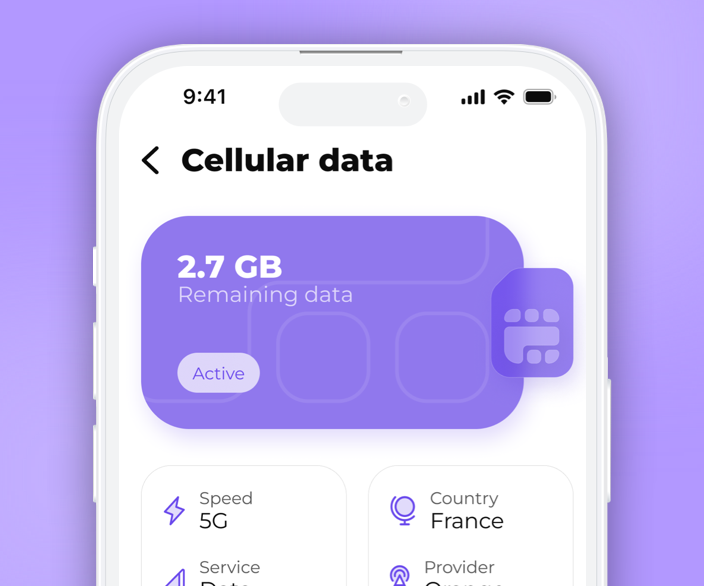
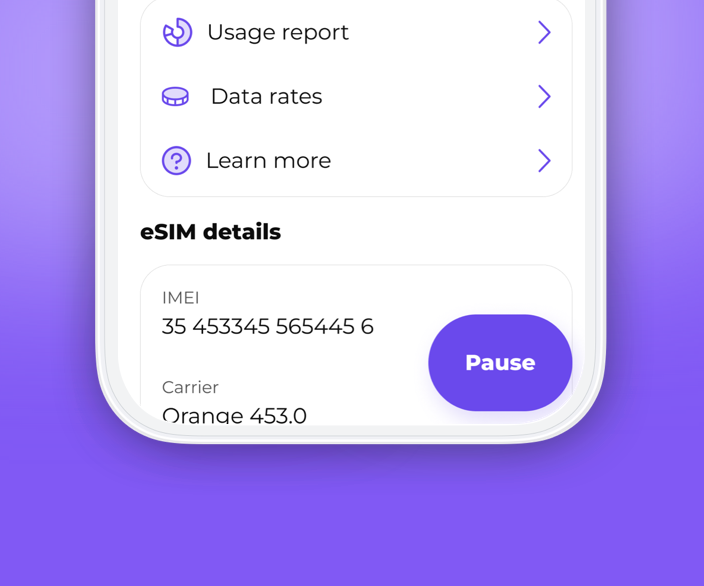
• In the app: balance, top-ups and plan changes are all handled from your phone.
96%. That is the share of Nicaragua's population inside 4G/LTE reach according to the national regulator — a better number than most people expect from a country where the passenger trains stopped running in 1994 and half the good stuff is up a volcano. What the figure does not tell you is where the missing 4% sits, and that is what this page is for: what to expect in Managua, Granada and León, what really happens on Ometepe and the Río San Juan, and how much data a two-week loop costs.
Host networks and real-world coverage
Who carries the signal: three operators host SLYNUMBER traffic in Nicaragua — Claro Nicaragua, Tigo Nicaragua and CooTel. Your phone measures what is on offer, locks onto the strongest of the three, and repeats that decision every time you move. You never pick a network by hand, and you never need to.
5G, honestly: it exists in the main cities and not much beyond them. Opensignal's Nicaragua Mobile Network Experience reporting records users in Managua, León, Granada, Masaya and Estelí spending over 6% of connected time on 5G, averaging more than 135 Mbps down. The workhorse is LTE: the regulator TELCOR (Instituto Nicaragüense de Telecomunicaciones y Correos) reports 4G reaching over 96% of the population, with suburban speeds averaging 18–48 Mbps.
Leaving the country: the Nicaragua per-GB rate applies only while a Nicaraguan network is carrying you. Head into Honduras, Costa Rica or El Salvador and the local rate takes over automatically; all of them are published on the SLYNUMBER destinations page. No new profile, no settings to touch, and your remaining credits follow you across.
Supported hardware: iPhone XS and newer, Google Pixel 3 and newer, and Samsung Galaxy S20 and newer in carrier-unlocked form, plus most eSIM-capable tablets. Open Settings → Cellular → Add eSIM on the device you plan to travel with; if the option is there, the profile will install.
1. Why an eSIM wins in Nicaragua
There are four ways to get data here, and three of them cost you something other than money — time at a counter, a number you lose, or an evening spent asking for a password. Set side by side, it is not close.
No counter, no passport, no new number
A local prepaid chip is inexpensive once you have it, but getting it means finding a registered dealer, showing your passport, and accepting a Nicaraguan number nobody who needs you already has. The eSIM installs from your sofa, keeps your own number reachable, and is live before you reach immigration. On a trip that crosses four borders, that difference multiplies four times over.
Per gigabyte, not per calendar day
Roaming add-ons charge for days whether you use them or not, and the invoice arrives once you are home and past caring. SLYNUMBER deducts against the Nicaragua per-GB rate only while a Nicaraguan network is carrying you, shows the balance dropping in the app as it happens, and adds nothing at the end of the cycle. A rest day in a hammock costs you nothing at all.
Signal you brought with you
Hostel and cafe Wi-Fi in Granada or Estelí is fine for scrolling and unreliable for anything with a deadline attached. Your own connection means you can upload from a crater rim, take a work call from a bus seat, and confirm a booking without asking a stranger for a password. It also keeps you off shared networks you have no particular reason to trust.
One handset, two lines
Travellers who want a separate number for listings, banking or dating apps often end up carrying a spare phone. An eSIM plus a SLYNUMBER U.S. number does the same job in one device: your home line stays on the physical SIM, the eSIM carries Nicaraguan data, and the virtual number handles everything you would rather not attach to your personal line. It works in 150+ countries and follows you home.
2. Where the coverage is, and where it is not
The honest version, region by region. Cities and paid attractions are well served; the Caribbean side, the middle of the lake and the northern cordilleras are not, and planning around that is easy once you know.
The capital, Masaya, Granada and Rivas
This strip carries almost all of Nicaragua's network investment. Dense LTE runs through Managua, Masaya and Granada and down the Panamericana to Rivas, alongside the country's small 5G layer. Hotspotting a laptop from a Granada courtyard cafe is entirely realistic. The one recurring annoyance is congestion around Mercado Oriental and the Managua bus terminals at peak hours, which slows uploads rather than stopping them.
León, Chinandega and the trailheads
León city and the road out to Chinandega are solid. The volcanoes behind them are a mixed picture: the bases and access roads to Cerro Negro and Telica usually hold LTE, the upper slopes and the far side of the ridgelines do not, and a summit can be either depending on which way you are facing. Anything you need on the mountain — trail notes, a downloaded map, your guide's number — should be saved before you start walking.
The island, the ferry and the coffee country
Moyogalpa and Altagracia have workable LTE, as does most of the paved road between them. Coverage falls away toward Balgüe, on the Maderas side, and in the middle of the lake during the San Jorge crossing. Treat Ometepe as intermittent rather than offline: enough signal to send a message from town, not enough to trust live navigation between farms. Estelí, Matagalpa and Jinotega follow the same rule — good in town, thin on the coffee roads.
Bluefields, the Corn Islands and Río San Juan
This is where honesty matters. The autonomous regions on the Atlantic coast, the Corn Islands, and the Río San Juan corridor toward Indio Maíz have thin and inconsistent coverage: usable in the larger settlements, absent between them. CooTel and Claro reach further into the towns than you might guess, but plan for long stretches with nothing at all. Download maps, tell someone your route, and treat any bars you find out there as a bonus.
3. Getting online in three moves
Ten minutes of setup at home, and none of it repeated at the airport.
Get the app,
choose a plan
SLYNUMBER downloads from the App Store or Google Play. Create an account and pick a cycle: $4.99 monthly, taken as $14.99 every three months, or $49.99 for the year. Activating the eSIM itself is a one-time $5, and data credits are bought on top at the Nicaragua rate.
Load the profile
before departure
The app issues a QR code — scan it, or type the activation details in by hand. Do it while your home connection is stable rather than on airport Wi-Fi. The profile then sits inactive on the device until you say otherwise, so it consumes nothing before you travel.
Flip it on
after landing
Enable the SLYNUMBER eSIM in your phone's cellular settings once you are on the ground. It attaches to Claro, Tigo or CooTel by signal strength and keeps reselecting as you move between Managua, the lake and the highlands. No APN details, no menus to hunt through.
4. How the apps behave on Nicaraguan networks
Four apps, four realistic pictures of what the connection does out here and what each one costs you in data.
Your own number, still reachable
Almost every arrangement in Nicaragua happens on WhatsApp — a guide confirming a 4am start for Telica, a hostel in Moyogalpa holding a bed, a driver sending his plate number for the Rivas pickup. Your existing number carries on working, because the app authenticates against the number rather than the SIM underneath it. Voice calls draw roughly 5 MB a minute, so a fortnight of daily calls home sits under 500 MB; video is nearer 9 MB a minute and worth saving for evenings. One practical note: on Ometepe, send your confirmations while you still have signal in Moyogalpa rather than trusting the interior of the island.
Posting from craters and courtyards
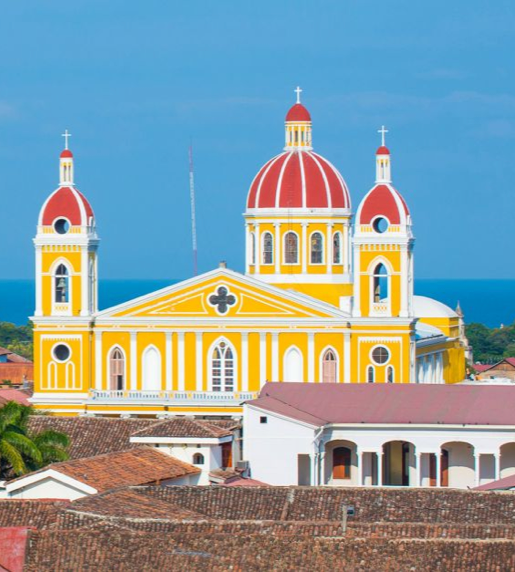
Nicaragua photographs unfairly well — the yellow bell tower of La Merced above Granada's rooftops, black ash slopes on Cerro Negro, the lava glow in the Santiago crater at Masaya after dark, Las Isletas from a panga at sunset. Uploading a 60-second Reel at 1080p takes about 70 MB, and a Story batch from a full day out runs 30 to 50 MB. Claro, Tigo and CooTel between them hold LTE in the city centres and at the main paid viewpoints, which covers most of that list. What they do not hold is the Maderas trail on Ometepe, so let posts queue and send them once you are back down.
Filming the loud parts
Adventure footage is what Nicaragua hands you: volcano boarding down Cerro Negro, the swim at Ojo de Agua, a chicken bus filling past capacity outside Mercado Oriental, the pottery workshops of San Juan de Oriente. A finished 60-second upload runs 40 to 85 MB depending on resolution, while an hour of evening scrolling spends closer to 800 MB — usually the single largest line in a traveller's data bill. Crowds compress towers, so the Hípicas parades in August can slow an upload badly; the eSIM hops to a less congested network on its own. Keep an eye on the running total in the app.
Routing with an offline safety net
Nicaragua is easy to navigate and hard to navigate blind. Google Maps over eSIM data handles the Panamericana through Masaya, Granada and Rivas, the León highway, and the climb to the Catarina mirador without complaint. It struggles where you would expect: the unpaved network on Ometepe between Altagracia and Balgüe, the Río San Juan corridor down to El Castillo, the roads inland toward the Cordillera Isabelia, and the whole Caribbean side. Download the country for offline use before you leave — under 180 MB — and live routing resumes the second a tower comes back, with arrival times correcting themselves as it does.
Best eSIM for Nicaragua
The full setup in a couple of minutes, start to finish.
See the whole process on screen: buying data in the app, installing the eSIM profile by QR code, and switching it on so it finds Claro, Tigo or CooTel as soon as you arrive.
6. SLYNUMBER against the usual options
Travel data, a spare number and a measure of privacy normally mean three separate purchases from three separate companies. The comparison below shows how the common alternatives line up against one SLYNUMBER account.
| Feature |
SLYNUMBER |
Google Voice |
Burner Apps |
Carrier 2nd line |
| Real U.S. mobile number | Yes | No | Varies | No |
|---|
| SMS verification for apps | Yes | Limited | Often blocked | Yes |
|---|
| Immune to SIM swapping | Yes | Yes | Yes | No |
|---|
| Custom voicemail | Yes | Yes | Rarely | Yes |
|---|
| International calling | Yes | Limited | Rarely | Carrier dependent |
|---|
| eSIM / Data plans | Yes | No | No | Carrier dependent |
|---|
| Number permanence | Permanent | Permanent | Temporary | Permanent |
|---|
| Requires carrier number | No | Yes | Varies | Yes |
|---|
| Starting price | $14.99 / 3 months | Free | $2–$5/week | $10–$15 add-on |
|---|
7. The full feature and price list
Core features
What the account includes, regardless of which billing cycle you choose.
- A genuine U.S. mobile number for voice, SMS and MMS — not a VoIP line.
- Everything routed over data, so your Nicaragua eSIM or any Wi-Fi will do.
- One eSIM profile good for data in 120+ countries, each priced at its own per-GB rate.
- The number itself reachable across 150+ countries.
- Credits with no expiry date attached to them.
- Real-time balances, top-ups and plan switches from the app.
- SlyAI on hand inside the app for setup and billing questions.
Services that routinely reject internet numbers accept this one — WhatsApp, Telegram, PayPal, Venmo, Instagram, Snapchat, Amazon and Gmail all read it as a standard U.S. mobile line, which keeps logins and recovery codes working while you are away.
Security
Calls are protected with SRTP and all other traffic with TLS. Ownership sits with your account rather than a physical chip, which removes the SIM-swap pathway entirely and means a phone lost on a volcano or dropped off a boat does not take your number with it.
Pricing
Two cycles, credits sold separately, and no automatic escalations.
- $4.99 monthly, charged quarterly as $14.99 every three months.
- $49.99 once, covering a full year.
- Credits at $10 for 1,000 — a credit buys a minute of talking, one SMS or one MMS — and they never expire.
Apps and devices
Available on the App Store and Google Play. Supported hardware is iPhone XS and later, Google Pixel 3 and later, Samsung Galaxy S20 and later when carrier-unlocked, and most tablets with eSIM support. Settings → Cellular → Add eSIM will tell you in seconds whether your device qualifies.
8. Nicaragua eSIM: common questions
Mostly, yes — Nicaragua has no passenger rail, so this is a question about roads and water. The Managua to Granada run is about 45 km and roughly an hour on the Panamericana, with continuous LTE and 5G around the Roberto Huembes terminal and the Granada terminal. Tourist shuttles to León and Estelí behave much the same. Two known soft spots: the stretch past Tipitapa toward the Mombacho slopes, and the middle of the San Jorge to Moyogalpa crossing, where Lake Nicaragua puts real distance between you and the nearest tower.
Only the price per gigabyte. At Peñas Blancas heading for Costa Rica, or Guasaule, El Espino and Las Manos heading north into Honduras, the profile releases the Nicaraguan network and attaches to a local host, usually within a minute of clearing immigration. Nothing to install, nothing to scan, no APN to edit. Nicaragua's rate stops applying and the next country's takes over, and both are published on the SLYNUMBER destinations page. Credits are country-agnostic and never expire, so a balance bought for Granada spends fine in Liberia.
Budget 6 to 8 GB for fourteen days covering Granada, Ometepe, León and Estelí. Navigation, WhatsApp and a nightly photo upload is the biggest recurring cost and stays modest — under 3 GB if you are disciplined. The figure climbs once you start posting video: daily Reels from Cerro Negro or the Masaya crater rim push you toward 8 GB, and hotspotting a laptop in a Granada co-working space adds a couple more. Charges accrue at the Nicaragua rate as you go, and leftovers survive to the next trip.
It gives your phone a second identity: a real U.S. mobile number that lives in the app rather than on a SIM tray. Calls, SMS and MMS ride over whatever data you have — the Nicaragua eSIM on a bus, hostel Wi-Fi at night — and land as an ordinary U.S. mobile call or text. Networks classify it as mobile rather than VoIP, which is why services that reject internet numbers accept this one. The number reaches you across 150+ countries, so it outlives any single trip.
You can, and for local calls it is cheap. What it does not give you is continuity. A prepaid line means a new number in every country, a shop visit with your passport, and a number that stops existing when the balance runs out — awkward when a bank or a booking needs to reach you months later. The SLYNUMBER line stays yours across devices and borders, is managed from the app rather than a counter, and draws on credits you already hold.
The number bills on one of two cycles: $4.99 a month taken quarterly as $14.99, or $49.99 for a full year. Talk and messages run on credits, priced at $10 per 1,000, where one credit equals a minute of a call, one SMS or one MMS. Credits do not expire. Data sits outside all of that: a single $5 eSIM activation fee, then gigabytes at the Nicaragua rate, bought when you need them. Nothing is bundled and nothing renews silently.
Yes, structurally. A SIM swap depends on convincing a carrier to port your number onto a new physical SIM. Remove the SIM from the equation and the attack has no surface: the number belongs to your SLYNUMBER account and is reached by logging in. Calls travel over SRTP and everything else over TLS. It helps on the trail too — drop your phone in the ash on Cerro Negro or lose it on a boat and the number reappears on the next device you sign in from.
They do, because the line registers as a genuine U.S. mobile number rather than a VoIP endpoint — the distinction most verification systems test for. In practice that covers WhatsApp, Telegram, PayPal, Venmo, Instagram, Snapchat, Amazon and Gmail. The advantage while travelling is stability: one number for every account, instead of swapping in a local SIM and locking yourself out of the login holding your onward flights. Codes arrive in the app over your Nicaragua eSIM data.
Everywhere the app can get data, in 150+ countries. On a hostel connection in León, on eSIM data halfway up Mombacho, on airport Wi-Fi in Managua — the number behaves identically. Callers dial the U.S. number they already have for you and have no idea where you are; outgoing calls display it as well, which matters when a bank returns your call. Credits are drawn the same way regardless of country and carry over between trips rather than resetting.