Quick Facts:
• Skip the airport counter: install the profile at home and arrive with data already running.
• Three host networks: Telcel, Movistar and AT&T, chosen by your phone according to signal.
• Charged per gigabyte: the Mexico per-GB rate, with no bundle, no contract and no roaming surcharge.
• Nothing expires: unused credit sits waiting for your next trip, however long that takes.
• Keep your own number: WhatsApp carries on exactly as before, with no SIM to remove.
The classic mistake in Mexico is landing at Benito Juárez, joining the queue at a SIM counter and paying tourist prices for a bundle you will never finish. Skip it entirely. A SLYNUMBER eSIM installs onto the phone in your pocket before you fly, connects to the country's three big networks on arrival, and bills by the gigabyte — so a fortnight of mercado hunting, translation apps and Reels costs what it costs, and not a peso more.
Networks and coverage in Mexico
Three host networks carry your data: Telcel (América Móvil), Movistar México and AT&T México. The phone chooses between them by signal strength and keeps re-checking as you move. You never touch a setting.
Where 5G shows up: Mexico keeps building out its 5G layer city by city. Opensignal's Mexico Mobile Network Experience reporting has users in Mexico City, Guadalajara, Monterrey, Puebla and Tijuana on 5G for more than 21% of their connected time, averaging above 195 Mbps on download. The regulator, IFT (Instituto Federal de Telecomunicaciones), reports 4G/LTE reaching over 99% of the population, with suburban speeds averaging 35–75 Mbps.
If the trip continues: the Mexico per-GB rate applies while your phone sits on a Mexican network. Cross into the United States, Guatemala or Belize and each bills at its own published rate, all of them on the SLYNUMBER destinations page. No new eSIM, no profile juggling, and whatever credit you were carrying rolls straight over.
What it runs on: iPhone XS and newer, Google Pixel 3 and newer, carrier-unlocked Samsung Galaxy S20 and newer, and most eSIM-capable tablets. Check before you pay by opening Settings → Cellular → Add eSIM. If that option exists on your handset, you are set.
1. The case for SLYNUMBER in Mexico
Mexico rewards the traveller who wanders: a market two streets over, a mezcalería somebody mentioned, a bus to a town that was never in the plan. All of it depends on a phone that works. Here is what you are getting.
Gigabytes, not guesswork
You are charged for the data you consume at the Mexico per-GB rate, and that is the whole arrangement. There is no package to size in advance and no unused allowance evaporating at midnight on day thirty. Some days you will burn through translation lookups and map searches in a market. Other days you will be on a beach and touch nothing at all. Pay-as-you-go handles both without you having to think about it. Top up in the app when the balance gets low, and whatever survives the flight home stays on your account.
Online before baggage claim
Install the profile at home, days ahead if you prefer. It takes one QR scan. Then when you land in Mexico City, Cancún or Guadalajara you toggle it on and the phone attaches to a network while you are still walking down the corridor. You can order a ride, message the host and check the address without hunting for airport Wi-Fi first. No passport photocopy at a counter, no waiting on an activation SMS that never arrives. The queue is somebody else's afternoon.
The same profile everywhere else
This is not a Mexico-only purchase. The eSIM covers 120+ countries on one profile, so a longer route through Guatemala, Belize or back up into the United States needs nothing new installed. Each country bills at its own rate, and the handover happens by itself the moment the phone finds a local network. Credits cross borders with you and never expire, which suits slow travel very well. One app, one balance, and no drawer full of plastic SIMs from trips you half remember.
No swap, no lost messages
Your regular line stays active in the phone. The eSIM simply adds data alongside it, so WhatsApp keeps running on the number your family already has and codes sent to your home line still reach you. Nothing is removed and nothing gets left behind in a hotel drawer. If you also want a permanent U.S. mobile number for banking, marketplaces and sign-ups, SLYNUMBER offers one inside the same app — a real mobile line, not a VoIP number that forms reject.
2. What coverage looks like where you are going
Coverage in Mexico is strong where people live and patchier where the best ruins are. A quick region-by-region read before you plan the route.
The capital and its barrios
The best-served place in the country. 5G is common across Roma Norte, Condesa, Polanco and the Centro Histórico, and LTE holds up inside most of the Metro, including the deeper lines. Uploads from the Zócalo and Templo Mayor go through quickly, and Coyoacán, Xochimilco and the Basílica de Guadalupe are all comfortably covered. A packed Sunday market can slow things for a few minutes.
Puebla, Oaxaca, Guanajuato
City centres are reliable. Puebla, Querétaro, San Miguel de Allende, Guanajuato and Oaxaca all carry solid LTE with 5G in the busier districts, which is plenty for translating a menu or posting from a rooftop. Thick colonial stone and narrow streets can weaken the indoor signal, and the mountain roads out towards Hierve el Agua or Monte Albán have real gaps. Cache the route before setting off.
Mérida, Cancún and the coast
Mérida, Cancún, Playa del Carmen and Tulum are well covered, and the highways between them keep LTE for most of the drive. Chichén Itzá and the coastal resorts have usable service throughout the day. It thins in the jungle interior, around the cenotes and on the boat crossings to Isla Mujeres or Cozumel. Bacalar is fine in town and much less so out on the water.
Border cities down to Baja
Monterrey and Tijuana are among the quickest cities in the country, with Guadalajara close behind. The toll roads, including the Maxipista to Guadalajara and the Autopista del Sol, hold a signal near the towns they pass. Where it disappears is the empty country: the Copper Canyon, long Baja desert stretches and the passes through the Sierra Madre Occidental. Download offline maps for those legs and stop worrying about them.
3. Setting it up in three steps
No shop, no paperwork, no borrowed Wi-Fi at arrivals. Ten minutes on your sofa covers all of it.
Download the app,
pick Mexico
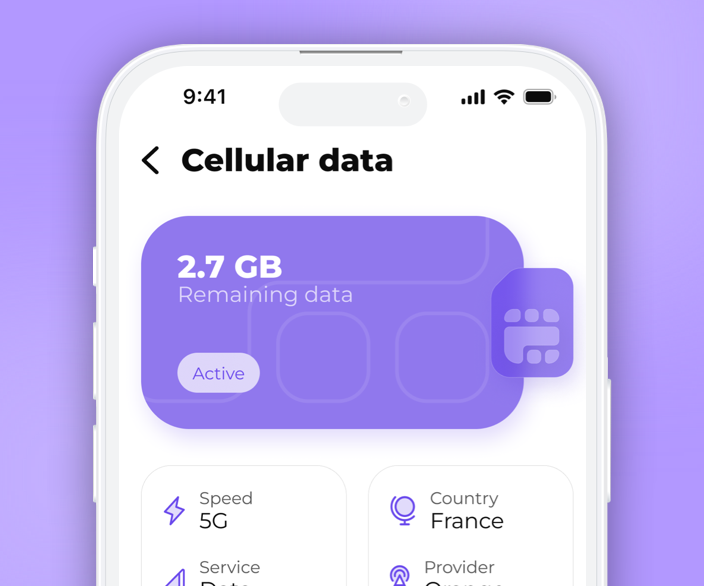
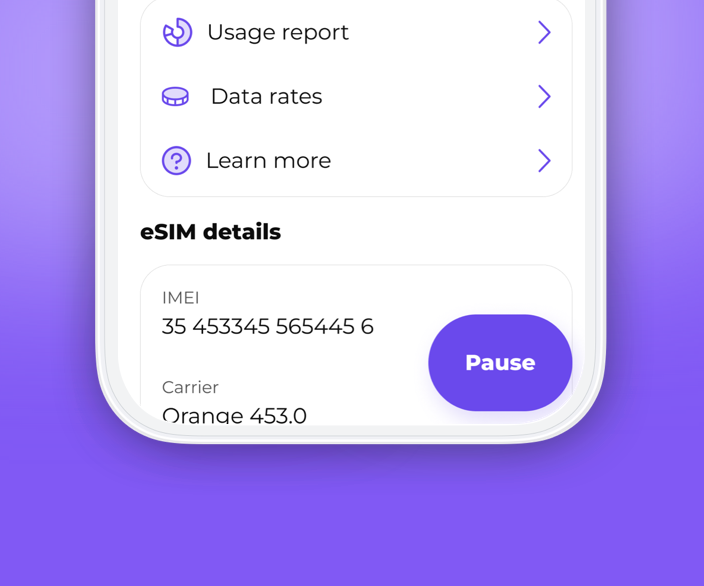
Install SLYNUMBER from the App Store or Google Play, create an account and select Mexico. Data is priced by the gigabyte and bought separately, and the eSIM profile carries a one-time $5 activation fee. Buy a small amount to begin with, because the app tops you up in seconds later on.
Scan the QR code
before you travel
The app produces a QR code. Scan it with the phone, or add the eSIM manually in your settings, and the profile installs itself. Do this on home Wi-Fi. Installing needs a connection, and the one moment you are guaranteed not to have a good one is the moment you land without it.
Turn it on,
let it connect
Enable the SLYNUMBER eSIM in your device settings once you arrive. The handset registers itself on Telcel, Movistar or AT&T, taking whichever holds the strongest signal, and re-checks that choice as you move from a city centre out to a coastal road.
4. What each app costs you in data
Four apps account for most of a traveller's data in Mexico. Here is roughly what each one costs, and where you will be leaning on it hardest.
How Mexico actually communicates
WhatsApp is how you will confirm a table, arrange a driver and check in with a host here, and your existing number keeps working untouched, because the eSIM adds data rather than a new identity. Voice calls consume roughly 3 to 8 MB a minute, so nightly calls home across two weeks barely dent a single gigabyte. Send a pin from a taquería in Condesa, drop photos from Teotihuacán into the group chat, take a video call from a Coyoacán courtyard. Real mobile data beats a café network shared with forty other customers, which is usually the difference between a conversation and a series of frozen frames.
Colour worth posting immediately
Few countries photograph better than this one. Stories from the Zócalo at dusk, a Reel of a comal working in Mercado de San Juan, a carousel from Chichén Itzá or the pastel streets of Guanajuato — posted from where you are standing rather than saved for later. A 60-second 1080p Reel costs around 50 to 80 MB to upload, so even an enthusiastic week of posting fits inside a few gigabytes. Telcel, Movistar and AT&T all run strong LTE through city centres and the major archaeological sites. Instagram saves each capture locally as you shoot, so a weak signal inside a museum never costs you the shot.
Food footage, filmed and posted
The country is one long content reel. A POV walk through Mercado de la Merced, a slow pan across altars during Día de los Muertos at the beginning of November, dancers at the Guelaguetza Festival in Oaxaca, a tortilla pressed in front of you at Mercado Roma. A standard 60-second clip uploads at somewhere between 30 and 100 MB depending on export quality. Because the eSIM hops between three carriers, you can still post from inside a crowded plaza where one network on its own would be overwhelmed. The app shows your remaining balance live, so a top-up never surprises you mid-upload.
Finding the place with no sign outside
Navigation earns its keep in Mexico. Metro routing across the capital, walking directions to a stall three streets off the Zócalo, driving turns along the Autopista del Sol, cycling the seafront down at Tulum. Coverage is dependable in cities and along the toll roads, but the Copper Canyon, the Yucatán back roads near the cenotes and the Sierra Madre passes will lose you for a while. Download the offline region first, because all of Mexico fits in under 1500 MB and a single state is a fraction of that. As soon as a network reappears, live routing resumes and your arrival time corrects itself.
Best eSIM for Mexico
Under two minutes of video showing exactly what the setup looks like, so none of it is a surprise.
A walkthrough of the SLYNUMBER eSIM for Mexico, from buying data inside the app to scanning the QR code and watching the phone connect to a Mexican network.
6. Put side by side with the alternatives
Travel SIMs, second-number apps and carrier roaming add-ons all promise more or less the same thing. The table lines them up against SLYNUMBER on cost, on what happens to your privacy, and on whether the number is still yours in six months.
| Feature |
SLYNUMBER |
Google Voice |
Burner Apps |
Carrier 2nd line |
| Real U.S. mobile number | Yes | No | Varies | No |
|---|
| SMS verification for apps | Yes | Limited | Often blocked | Yes |
|---|
| Immune to SIM swapping | Yes | Yes | Yes | No |
|---|
| Custom voicemail | Yes | Yes | Rarely | Yes |
|---|
| International calling | Yes | Limited | Rarely | Carrier dependent |
|---|
| eSIM / Data plans | Yes | No | No | Carrier dependent |
|---|
| Number permanence | Permanent | Permanent | Temporary | Permanent |
|---|
| Requires carrier number | No | Yes | Varies | Yes |
|---|
| Starting price | $14.99 / 3 months | Free | $2–$5/week | $10–$15 add-on |
|---|
7. Features and pricing
What you get
The account does two things at once: travel data priced per gigabyte, and a permanent U.S. mobile number that behaves like any other. In full:
- A genuine U.S. mobile number, accepted by services that reject VoIP lines
- Pay-as-you-go eSIM data in 120+ countries, Mexico included
- Use that number from 150+ countries over any data connection
- Calling, SMS and MMS credits that never run out of time
- Setup by QR code in minutes, with no shop visit and no documents
- Usage, top-ups and plan changes all handled from your phone
- SlyAI assistant inside the app whenever something needs explaining
Because the line is a real U.S. mobile number and not a VoIP address, sign-up and verification screens accept it: WhatsApp, Telegram, PayPal, Venmo, Instagram, Snapchat, Amazon and Gmail included.
Kept private
TLS and SRTP encryption wrap your calls and messages while they are in transit, so the open network at a hostel or a beach bar has nothing readable to collect.
The numbers
Two cycles for the number, credits for talk and text, and a single $5 activation fee for the eSIM. That is the entire price list.
- Quarterly: $4.99 a month, taken as $14.99 every 3 months
- Annual: $49.99 for twelve months in one payment
- Credits: $10 for 1,000 — a credit is one call minute, one SMS or one MMS; data credits are bought separately and never expire
Getting the app
SLYNUMBER is on the App Store and Google Play. Everything happens in one place: buy data, install the eSIM, watch the balance, change the plan, and ask SlyAI whatever you have not worked out yet.
8. Frequently asked questions about Mexico eSIMs
Mostly, yes. The Tren Maya corridor between Cancún and Palenque runs roughly 1,554 km in about fifteen hours, crossing ground served by Telcel, Movistar and AT&T, the three networks your eSIM switches between without being asked. Expect steady 4G/LTE, with 5G around the Cancún Aeropuerto and Palenque stations. The jungle stretches inland from the Yucatán coast are where it thins out. Overnight coaches tell the same story. Download offline maps and a playlist before you board. Signal comes back at the next town.
Nothing breaks. The eSIM is a global profile, so as you cross it looks for a supported local network and registers there, usually inside a minute. The Mexico per-GB rate stops at the frontier and the new country's rate takes over, every one of them listed on the SLYNUMBER destinations page. Driving north into the United States works the same way. You will not install a second profile, edit an APN or swap a thing. Your remaining credits travel with you. They never expire, and they still work when you come back.
Around 5 to 7 GB for a fortnight, assuming you are eating your way around. Translation apps, map searches for the next mercado and a steady flow of photo uploads are the real consumers. A light traveller who checks routes and messages home lands nearer 3 GB. Add daily Reels from Roma Norte and an evening video call and 6 GB is normal. Rent a car for the Yucatán and lean hard on navigation and you might touch 9 GB. Buy a few gigabytes, then top up in the app. Nothing expires.
A real U.S. mobile number that lives in an app rather than on a chip. Calls, texts and picture messages arrive over whatever data connection you happen to be using, which means it reaches you in a Coyoacán café exactly as easily as at your kitchen table. No tray, no carrier shop, no contract for a line you use twice a month. It is not welded to one handset either, so it follows you to a new phone or a tablet. And because it is a proper mobile line rather than VoIP, the internet treats it as legitimate.
No, and the difference shows up months later. A burner number is rented from a shared pool: stop paying and it goes back in, often landing with a stranger who then receives whatever codes you forgot to move across. Your bank does not care that the number was only meant to last a weekend. A SLYNUMBER line stays yours for the life of the plan. It also verifies like a normal mobile number instead of being rejected as VoIP. Same convenience. Very different consequences.
Pick a cycle and the figure is fixed. Quarterly comes to $4.99 a month, charged as $14.99 every three months. Annual is $49.99 for the year in a single payment. Talking and texting run on credits: $10 gets you 1,000, and one credit equals a minute of call, one SMS or one MMS. They do not expire, so a quiet month costs nothing extra. Travel data is bought separately and priced per gigabyte by country. The eSIM itself carries a one-time $5 activation fee.
Yes, by removing the thing the fraud depends on. A SIM swap means convincing a carrier representative to move your number onto a stranger's SIM, usually using scraps of personal data found online. There is no SIM to move here and no counter to walk up to, so the attack has nowhere to begin. Your line sits behind an account login, and calls and messages travel over TLS and SRTP encryption. Leave the phone in a taxi in Guadalajara and you sign in on another device. The number is still yours.
They do, because it is a genuine U.S. mobile number and not a VoIP address that gets bounced at the door. WhatsApp, Telegram, PayPal, Venmo, Instagram, Snapchat, Amazon and Gmail all send codes to it happily. The practical win is abroad: codes land in the app over data, so you are not waiting on a home carrier to relay an SMS across a border, and not paying a roaming fee to receive six digits. Book a flight from a Puebla hotel lobby and the login behaves as it would at home.
Anywhere you can get online. The number is attached to your account rather than to a country, so it rings over the eSIM, over hotel Wi-Fi, over a friend's hotspot. The service reaches you from 150+ countries and the eSIM data side spans 120+, which covers most itineraries comfortably. Your contacts keep the same number they have always had. You keep answering without international charges. That is the entire point of separating a number from a piece of plastic.