The Short Version:
• Charged by the gigabyte: the Honduras rate is metered, so a morning of diving costs nothing in data
• Installed before departure: the QR code goes on at home and the profile waits until you enable it
• Mainland and islands: Tegucigalpa, San Pedro Sula, Choloma, La Ceiba and El Progreso are on solid 4G
• WhatsApp continues untouched: same number, same conversations, no SIM to swap out
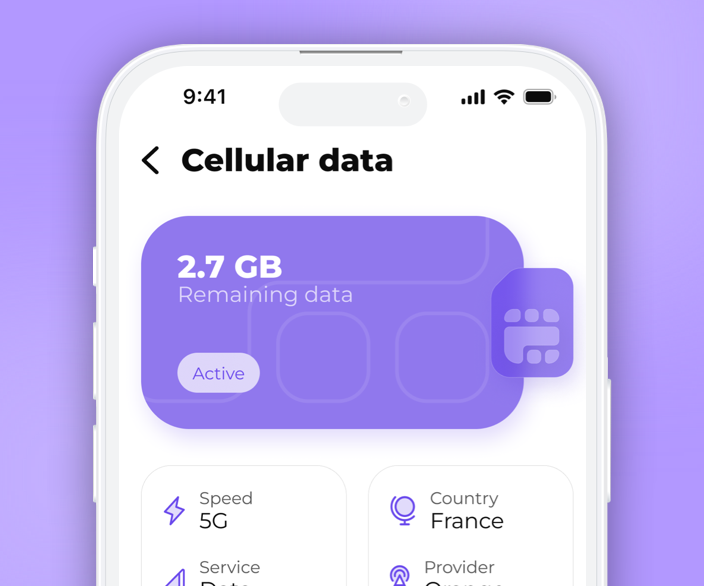
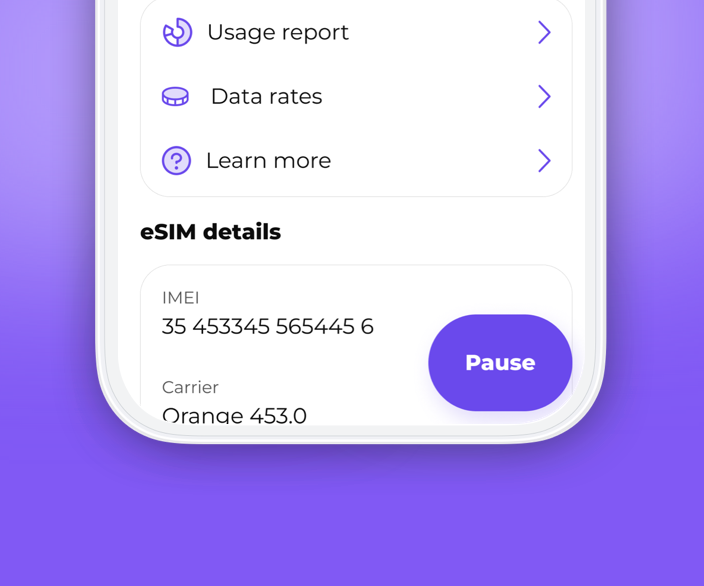
• Everything in the app: a live usage meter, top-ups on demand, and credits that never lapse
Your phone will be working before your dive bag reaches the truck. That is the whole promise, and it holds because a SLYNUMBER eSIM is installed from a QR code days earlier at home, then simply switched on when you land in San Pedro Sula or step off the boat at Roatán. Data is metered at the Honduras per-GB rate rather than sold as a bundle with a deadline, which suits a trip where three hours of every day are spent forty feet underwater and the phone stays in the dry box.
Which networks carry the eSIM in Honduras
Three host networks stand behind the profile here: Tigo Honduras, Claro Honduras and Hondutel. Your handset compares them continuously and registers on whichever is strongest at that particular dock, junction or hillside, so there is nothing for you to choose and nothing to reconfigure as you move around the country.
Realistic speeds: 5G exists but is still early here, and the everyday experience is a solid 4G one. Opensignal's Honduras Mobile Network Experience reporting shows users in Tegucigalpa, San Pedro Sula, Choloma, La Ceiba and El Progreso spending over 7% of their connected time on 5G at average speeds above 140 Mbps, while the regulator CONATEL Honduras (Comisión Nacional de Telecomunicaciones) reports 4G/LTE reaching more than 96% of the population, with suburban speeds of 20 to 50 Mbps. Expect noticeably less in the Mosquitia, on the outer cays and around Guanaja.
Continuing overland: the Honduras per-GB rate is what you pay while the handset is registered on a Honduran network, and it stops applying the moment you cross into Guatemala, El Salvador or Nicaragua, where that country's own rate takes over — each one published on the SLYNUMBER destinations page. Your remaining credits simply carry over with you.
Supported hardware: the eSIM installs on iPhone XS and newer, Google Pixel 3 and newer, Samsung Galaxy S20 and newer provided the handset is carrier-unlocked, and on most eSIM-capable tablets. If you want to be certain before buying, open Settings → Cellular → Add eSIM and see whether the option is there.
1. Why metered data suits an island trip
A dive holiday is not a steady stream of scrolling; it is bursts of activity separated by hours in the water, which is precisely the pattern that day-rate roaming passes handle worst and metered data handles best.
A balance with no expiry date
Whatever is left when you fly home stays exactly where it is, because credits are never expired for inactivity. The gigabytes you bought for a week on Roatán are still waiting whenever the next trip happens, whether that turns out to be Utila again or somewhere on the other side of the world.
The same profile, more than 120 countries
Honduras is frequently one leg of a longer Central American route, and the eSIM is built for that: it works in over 120 countries on a single installation, so continuing on to Guatemala or Nicaragua changes the rate you are charged and nothing else about your setup.
You are billed for traffic, not for time
Because the meter counts gigabytes rather than calendar days, the mornings your phone spends locked in a dry box on a dive boat cost you nothing whatsoever, and the evenings you spend uploading footage cost only what the upload actually consumed at the Honduras per-GB rate.
Nothing to buy after you land
The eSIM arrives as a QR code you scan at home, which spares you the search for a shop in Coxen Hole, the paperwork that comes with a local prepaid line, and the awkward business of opening a SIM tray with sand on your hands.
2. From reef to ruins, with a live signal
The classic Honduras itinerary swings between two very different worlds, and each one asks something slightly different of your connection.
Surface intervals, conditions and logs
Between tanks there is always something to look up: the forecast for the north side of the island, whether the current is running at a particular wall, the training video you meant to rewatch. All of it amounts to a handful of megabytes, and the phone is off the rest of the morning anyway.
Boat times that change without notice
Sea conditions rearrange the La Ceiba crossings and the short island flights more often than any timetable admits, so being able to check a departure, message ahead about a late arrival, or rebook from the dock itself turns a lost afternoon into a mild inconvenience.
Inland to the hieroglyphic stairway
The run west to Copán Ruinas takes you well away from the coast, and live maps plus a working number make the logistics painless: opening times for the ruins, a room in town, and a reliable way for the driver to reach you when plans shift.
A U.S. line that comes with you
Pair the eSIM with a SLYNUMBER number and your family, your bank and your employer all keep dialling the same U.S. line they always have, while you answer it from a hammock in West Bay without anyone being charged an international rate.
3. Getting online in three unhurried steps
None of this needs doing at the airport, and two of the three steps are better done a week before you fly.
Buy the plan
at home
Install SLYNUMBER from the App Store or Google Play, register, and pick your Honduras plan. Checkout includes the one-time $5 activation fee, and you add data credits separately, in whatever amount suits the length of the trip.
Install
by QR code
Scan the code the app displays, or enter the profile details by hand if you prefer, while your home Wi-Fi is still doing the work. The eSIM then sits quietly on the device until the day it is needed.
Turn it on
on arrival
When you land at San Pedro Sula, Tegucigalpa or Roatán, enable the eSIM in your settings and let the handset choose between Tigo, Claro and Hondutel on signal strength alone.
4. How your apps behave on Honduran networks
Four apps, the places you will genuinely be using them, and what each one takes out of your balance.
WhatsApp from the dock and the dry box
Your existing WhatsApp number carries on exactly as it is, because the eSIM contributes data and nothing else, which means no swap, no re-verification and no empty chat list to rebuild. In practice that looks like confirming a boat time in a West End group chat, sending a pin for the meeting point in Sandy Bay, or taking a video call home from a balcony above Utila's harbour in East Harbour while the sun goes down. Voice calls consume something like 4 to 8 MB a minute and video several times more, so a fortnight of daily contact still lands well under a gigabyte, and calls hold together far better on your own connection than on shared dive-shop Wi-Fi.
Instagram from West Bay to Copán
Honduras gives you two entirely separate feeds in one trip: the pale shallows and reef wall off West Bay on Roatán, and the carved stelae and hieroglyphic stairway at Copán, with the forested ridges of Pico Bonito and the cays at Cayos Cochinos somewhere in between. Coverage in the island towns and along the north coast is good enough to post while the light is still worth posting, and a 60-second Reel costs roughly 60 to 80 MB to upload, so a daily habit fits inside about 2 GB over ten days. Signal is thinner on the outer cays, so shoot generously and publish once you are back on the main island.
TikTok when the day gives you something
The material here writes itself, from a stern-mounted view of the boat pulling away from French Harbour to the noise and colour of the Feria Juniana in San Pedro Sula each June, the Gran Carnaval that fills La Ceiba every May, and the ordinary chaos of the Mercado de los Dolores in Tegucigalpa on a weekday morning. A clip of a minute or so uploads on anything from 40 to 95 MB depending on resolution, and in dense festival crowds the eSIM keeps switching between Tigo, Claro and Hondutel to find whichever is least congested. The app's live meter keeps the total honest.
Maps across the mainland and the island road
Live navigation is the one app that pays for itself here, whether you are driving the CA-5 between Tegucigalpa and San Pedro Sula, following the coast road east from Tela to La Ceiba, detouring around Lago de Yojoa, or simply threading the single island road from West End through Coxen Hole to French Harbour. Because the gaps are real in the Mosquitia, over the Sierra de Celaque and on the more remote cays, download the offline map of Honduras before you set off, which costs about 190 MB once and nothing thereafter. Routine turn-by-turn use draws under 5 MB an hour, and live rerouting resumes by itself when coverage returns.
Best eSIM for Honduras
Two minutes of video covering the whole setup, from purchase to first connection.
Watch the Honduras plan being bought, the eSIM installed from its QR code, and the handset registering on a local network after arrival.
6. Weighing SLYNUMBER against the alternatives
Every option on the table solves part of the problem: a local prepaid SIM is cheap but ties you to one country and one shop's opening hours, a roaming pass is convenient but priced by the day, and a burner app is free until a verification code fails to arrive. The table below sets them beside SLYNUMBER on the criteria that actually decide things mid-trip.
| Feature |
SLYNUMBER |
Google Voice |
Burner Apps |
Carrier 2nd line |
| Real U.S. mobile number | Yes | No | Varies | No |
|---|
| SMS verification for apps | Yes | Limited | Often blocked | Yes |
|---|
| Immune to SIM swapping | Yes | Yes | Yes | No |
|---|
| Custom voicemail | Yes | Yes | Rarely | Yes |
|---|
| International calling | Yes | Limited | Rarely | Carrier dependent |
|---|
| eSIM / Data plans | Yes | No | No | Carrier dependent |
|---|
| Number permanence | Permanent | Permanent | Temporary | Permanent |
|---|
| Requires carrier number | No | Yes | Varies | Yes |
|---|
| Starting price | $14.99 / 3 months | Free | $2–$5/week | $10–$15 add-on |
|---|
7. The full feature list and pricing
What the package contains
One account, two halves: the eSIM that moves your data and the number that keeps you reachable.
- Credits that never expire, no matter how long between trips
- Usage tracking, top-ups and plan changes handled in the app
- A genuine U.S. mobile number that is not flagged as VoIP
- eSIM data across 120+ countries from a single installed profile
- Number service available from 150+ countries
- TLS encryption on data and SRTP on voice calls
- The SlyAI assistant included in the app
Because it reads as an ordinary U.S. mobile line, the number is accepted where burner numbers are quietly refused: WhatsApp, Telegram, PayPal, Venmo, Instagram, Snapchat, Amazon and Gmail.
How it is secured
Data travels under TLS and voice under SRTP, and since the number is never bound to a physical SIM there is no card in existence for anyone to port, clone or talk a shop assistant into replacing.
What it costs
Two subscription cycles and one credit pack, with nothing hidden underneath:
- Quarterly cycle: $4.99 per month, billed as $14.99 every 3 months
- Annual: $49.99 covering a full twelve months
- Credit packs: $10 for 1,000 credits, one credit being a call minute, an SMS or an MMS
Where the app lives
SLYNUMBER is available on the App Store and Google Play, and a single login covers the eSIM, the U.S. number and your credit balance, with the SlyAI assistant on hand whenever it is quicker to ask than to go looking.
8. Honduras eSIM questions, answered properly
It holds for most of the crossing. Honduras has no passenger railway, so the journeys that matter are the CA-5 corridor between Tegucigalpa and San Pedro Sula and the sea routes out of La Ceiba to Roatán and Utila, which take roughly one to two hours depending on the island. Coverage from Tigo, Claro and Hondutel is dependable near both coastlines and thins in the middle of the channel, where the towers on either side are simply too far away. Load podcasts and offline maps at the terminal beforehand and the mid-water quiet is unremarkable.
Nothing at all, which is the point of a single global profile. Whether you leave at El Florido on the way back from Copán, at El Amatillo heading into El Salvador, or at Las Manos or Guasaule bound for Nicaragua, the handset finds a supported local network within a minute or so and billing moves to that country's own published per-GB rate, listed for every destination on the SLYNUMBER destinations page. There is no second eSIM to install and no APN to edit, and credits you bought for Honduras never expire.
Somewhere between 4 and 6 GB is a comfortable ten-day figure, largely because diving is the cheapest hobby your data plan will ever meet: two tanks a day means four hours with the phone dry and untouched. Messaging, boat schedules and evening browsing rarely exceed 250 MB a day, while daily uploads from West Bay and the ruins at Copán push the total nearer 5 GB. Buy a modest balance, watch the meter in the app for two days, and top up once you know your own rhythm.
It is a genuine U.S. mobile number that lives in the app instead of on a plastic SIM, which means carriers treat it as an ordinary mobile line rather than a VoIP number, and platforms from WhatsApp and Telegram to PayPal, Venmo, Instagram, Snapchat, Amazon and Gmail accept it without complaint. On a trip built around boats and remote coastline that matters, because the line follows any data connection, works from more than 150 countries, and keeps your personal number off every booking form you fill in.
Meaningfully different, yes. Burner services generally recycle VoIP numbers that verification systems have long since learned to reject, so codes silently fail to arrive and accounts get suspended once the platform notices. A SLYNUMBER line is a real U.S. mobile number and passes the same checks a domestic line does, and because it stays with you for as long as the plan runs, the accounts, contacts and message history attached to it survive well beyond a single holiday rather than disappearing when a temporary number lapses.
There are two cycles and one credit pack, so the arithmetic stays simple: the quarterly cycle comes to $4.99 a month, charged as $14.99 every three months, while a year paid in advance is $49.99. Calling and messaging draw on credits at $10 for 1,000, where one credit buys a minute of talk, one SMS or one MMS, and because credits never expire a single pack can quietly cover several trips. Nothing is locked behind a contract.
It does, because it removes the physical object the whole scam depends on. A SIM-swap attack works by convincing your home carrier to move your primary number to a SIM the attacker controls, whereas a SLYNUMBER line has no card to port and no shop counter to manipulate; it sits behind your app login, with TLS protecting data in transit and SRTP protecting voice. Route your bank, brokerage and email recovery through it and your personal number stops being the key to everything.
They will, wherever you have a data connection. Because the line is a real U.S. mobile number, the SMS codes that banks, exchanges and everyday services send arrive normally, including the ones VoIP numbers routinely fail to receive, and they land in the app rather than on a device you left at home. Request a login code from a dock in West End, read it while the tanks are being filled, and sign in as though you were sitting in your kitchen.
Yes, because the number is carried entirely by data rather than by any local network agreement. With the eSIM connected to Tigo, Claro or Hondutel you can take a call in Coxen Hole, return a text from a bar in West End, and confirm a hotel in Copán Ruinas on the drive down, while whoever is calling dials an ordinary U.S. number and pays their usual domestic rate. Where hotel or dive-shop Wi-Fi is stronger, the app happily uses that instead.