Key Takeaways:
• What it is: A virtual phone number for OTP is a real, mobile-tagged U.S. number — issued by SLYNUMBER — that you use specifically to receive one-time passcodes for sign-ups, logins, password resets, and two-factor authentication (2FA).
• Who should use one: Anyone managing dozens of online accounts, anyone whose bank requires SMS 2FA, freelancers handling client logins, and anyone abroad who needs to receive U.S.-only verification codes.
• Primary benefits: Centralizes OTP traffic on one auditable line, isolates verification SMS from personal texts, removes SIM-swap risk from the line guarding your accounts, and works internationally.
• Quick next step: Download the SLYNUMBER app on iOS or Android, or visit slynumber.com/app/register to get started.
1. What is a virtual phone number for OTP?
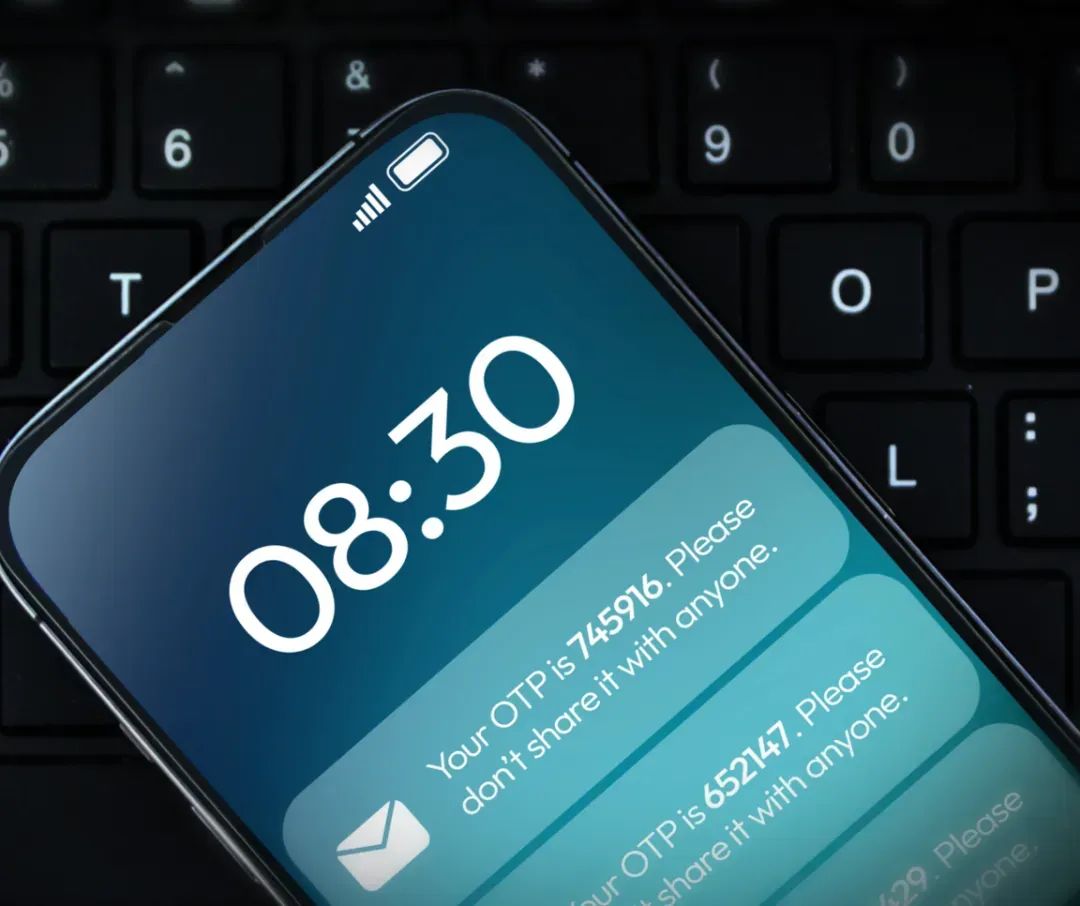
A virtual phone number for OTP is a real U.S. mobile number — registered in the North American Numbering Plan (NANP) and tagged as mobile, not VoIP — that you use solely to receive one-time passcodes. A one-time passcode is a short numeric string (typically six digits) that a service texts you to verify your identity for a single login or transaction, then expires within five to ten minutes. Banks, brokerages, email providers, social media, marketplaces, and government portals all rely on OTPs as a second factor on top of a password.
The underlying technology that delivers your SLYNUMBER number is Voice over Internet Protocol (VoIP) — phone service over Wi-Fi or mobile data — but the number itself is provisioned through Tier-1 mobile carrier infrastructure. That distinction matters: banks, brokerages, and government services routinely block VoIP-flagged numbers from receiving OTPs, while a SLYNUMBER number passes those line-type checks because it is registered as a real mobile line.
2. How OTP delivery works on a virtual number
Step 1: Register the service with your virtual number.
When you sign up for a bank, brokerage, or any account that supports SMS verification, you enter your SLYNUMBER mobile number — for example, (305) 555-0142 — in the phone field instead of your carrier SIM. The service stores that number as your 2FA destination.
Step 2: The service sends the OTP through the public SMS network.
When you log in (or trigger a password reset, or confirm a transaction), the service's backend hands the SMS to an aggregator, which routes it over the SS7 signaling network — the global mobile-messaging backbone — to the carrier hosting your SLYNUMBER number.
Step 3: The code arrives in the SLYNUMBER app, not on your SIM.
Because your SLYNUMBER number lives in the cloud, the SMS is delivered to the SLYNUMBER app inbox on any device you have signed into. You see the code, copy it, and enter it on the login screen. Total elapsed time: usually under 15 seconds.
Step 4: OTPs are stored in a separate, auditable inbox.
All OTP traffic lives in one inbox — the SLYNUMBER messages tab — instead of being mixed with personal texts, family group chats, and marketing SMS on your carrier line. That makes it easy to spot a fraudulent code (one you did not request), search for a specific service, and review your 2FA history.
Step 5: The number is independent of your carrier SIM.
If your carrier account is compromised through SIM swapping, your OTPs are unaffected — they route to a different number on different infrastructure. Your bank's 2FA stays in your control.
3. Risks of using your personal number for OTPs
Most people receive every OTP — bank, email, social, shopping — on the same carrier number that everyone they know calls and texts. That single point of convergence creates three specific risks.
-
SIM swapping: one attack, every OTP captured
In a SIM-swap attack, a scammer convinces your mobile carrier to transfer your phone number to a SIM card they control — usually by impersonating you with personal information harvested from data breaches. Once the swap completes, every OTP your bank, brokerage, email, and social accounts send arrives on the attacker's device. They can reset passwords, drain accounts, and lock you out before you notice your phone has gone dark.
The FBI's Internet Crime Complaint Center (IC3) reported SIM-swap losses growing from roughly $12 million in 2018 to over $72 million in 2022, with cryptocurrency wallets and bank accounts cited as the most common targets.
Why a SLYNUMBER helps: A SLYNUMBER number is not controlled by a mobile carrier. A SIM swap on your carrier line does not give an attacker access to the line your OTPs are routed to — it lives on different infrastructure protected by your provider account password.
-
SMS OTP weaknesses recognized by NIST
SMS as an authenticator is not perfect. The U.S. National Institute of Standards and Technology classifies SMS as a "restricted" authenticator, citing two specific attack surfaces: SIM swapping and SS7 signaling exploits (where an attacker with access to the global mobile-signaling network can intercept SMS in transit). Combined with the human factor — losing a phone, leaving it unlocked, or being phished into reading the code aloud — SMS OTPs are weaker than most people imagine.
The NIST Digital Identity Guidelines (Special Publication 800-63B) classify SMS-based authenticators as restricted because the channel is not protected against SIM-swap or SS7 interception attacks, and recommend layering additional factors where possible.
Why a SLYNUMBER helps: Although a virtual number does not eliminate the SS7-protocol risk inherent to all SMS, it dramatically reduces SIM-swap risk and lets you compartmentalize OTP traffic so a single compromise does not cascade across every account you own.
-
Phishing-driven OTP theft and impersonation
The most common OTP attack today does not involve hacking — it involves a scammer calling you, claiming to be your bank, and asking you to read back the verification code while they trigger a password reset in real time. When every OTP arrives on the same carrier line your real bank uses, the attacker's call seems plausible.
The FTC's 2023 Consumer Sentinel Network data shows impersonation fraud — much of it relying on a stolen OTP delivered to a personal number — was the largest reported scam category in 2023, with $2.7 billion in consumer losses.
Why a SLYNUMBER helps: When OTP traffic lives on a separate, dedicated line — and nobody but you knows that line's number — phishing calls to your carrier SIM that ask "what code did we just text you?" become obviously fraudulent, because no legitimate code ever lands on your carrier line.
4. Everyday benefits of a dedicated OTP line
A clean, searchable OTP inbox
One of the small daily annoyances of using your carrier SIM for verification is finding a code buried between a parent's text, a delivery notification, and a marketing blast. A dedicated SLYNUMBER OTP number gives you a single, chronologically sorted inbox containing only verification messages — easy to search ("Chase," "Coinbase," "Microsoft") and easy to audit.
Receive U.S. OTPs from abroad
If you travel or live outside the U.S., most U.S. banks, brokerages, IRS portals, and Social Security accounts only send 2FA codes to U.S. numbers. A SLYNUMBER U.S. number receives those codes over the internet to your phone in any of 150+ countries — no roaming, no SIM swap, no friend in the U.S. texting screenshots of codes.
One number for sign-ups across every service
Freelancers, founders, and households often manage twenty or more verified accounts: banks, brokerages, marketplaces, work tools, family streaming. Routing every OTP through one virtual line means you do not lose access to an account because the SIM you used to sign up has been replaced, lost, or recycled by your carrier.
5. How to set up an OTP virtual number in 5 steps:
- Download the app. Install SLYNUMBER from the App Store (iOS) or Google Play (Android).
- Create an account. Sign up with your email address and choose a strong, unique password — this is the credential that protects every OTP that lands on the number.
- Pick a U.S. mobile number. Choose any available area code. Many users select an area code unrelated to where they live so the OTP number cannot be cross-referenced with their physical address.
- Update each service to use the new number. Sign in to your bank, brokerage, Google, Apple, Microsoft, and social media accounts. In each account's security or 2FA settings, change the phone number on file to your SLYNUMBER number, confirm with the test code, and remove your old carrier number.
- Enable app-based 2FA on the SLYNUMBER account itself. In SLYNUMBER settings, turn on app-based two-factor authentication (an authenticator app code, not SMS). This protects the inbox where all your OTPs land.
6. Virtual number vs. other OTP-handling options
Several approaches exist for isolating OTPs from your personal carrier line. Here is how they compare across the features that matter most:
| Feature |
SLYNUMBER |
Google Voice |
Burner Apps |
Carrier 2nd line |
| Real U.S. mobile number | Yes | No | Varies | No |
|---|
| SMS verification for apps | Yes | Limited | Often blocked | Yes |
|---|
| Immune to SIM swapping | Yes | Yes | Yes | No |
|---|
| Custom voicemail | Yes | Yes | Rarely | Yes |
|---|
| International calling | Yes | Limited | Rarely | Carrier dependent |
|---|
| eSIM / Data plans | Yes | No | No | Carrier dependent |
|---|
| Number permanence | Permanent | Permanent | Temporary | Permanent |
|---|
| Requires carrier number | No | Yes | Varies | Yes |
|---|
| Starting price | $14.99 / 3 months | Free | $2–$5/week | $10–$15 add-on |
|---|
Quick recap: SLYNUMBER offers real U.S. mobile numbers starting at $14.99 every three months, receives OTPs from banks, brokerages, Apple, Google, and every major service, is immune to SIM-swap attacks on your carrier line, and works from anywhere in 150+ countries. Google Voice is free but its VoIP-flagged status causes many banks and government portals to refuse OTP delivery. Burner Apps ($2–$5/week) are too transient — a number that expires before your account does is worse than no number at all. A carrier 2nd line ($10–$15 add-on) gives a real number but inherits SIM-swap risk.
7. Features and pricing
Core Features
SLYNUMBER provides real U.S. mobile numbers — not VoIP-flagged numbers that get blocked by apps and services. Each number supports:
• SMS and MMS messaging, including OTP and verification codes
• Inbound and outbound voice calls
• Custom voicemail greetings
• Call routing, forwarding, and blocking
• International calling to 100+ countries
• Number tagging by purpose: OTPs, banking, business, or travel
• eSIM data plans for cellular connectivity without a local SIM.
SLYNUMBER numbers are accepted by all major banks, brokerages, and apps — including Chase, Bank of America, Fidelity, Coinbase, Apple, Google, Microsoft, WhatsApp, Telegram, PayPal, Venmo, Instagram, and Snapchat.
Security
Calls and messages are transmitted over encrypted connections using Transport Layer Security (TLS) — the same encryption standard that protects online banking — and Secure Real-Time Transport Protocol (SRTP), which encrypts voice data in transit.
Pricing
SLYNUMBER offers three billing cycles. Each plan includes the same full feature set:
• Quarterly: $4.99/month, billed as $14.99 every three months
• Annual: $49.99/year — lowest per-month rate
• Add-on credits: $10 for 1,000 credits (1 credit = 1 minute call, 1 SMS, or 1 MMS).
Platform Availability
The SLYNUMBER app is available on the App Store and Google Play Store. SLYNUMBER also includes SlyAI, a built-in AI assistant for instant help and conversation right inside the app.
8. Frequently asked questions
A one-time passcode is a short numeric code — usually six digits — that a service texts you to confirm a sign-up, login, password reset, or transaction. It is valid for a single use and expires within minutes. OTPs are the most common form of two-factor authentication (2FA) on the consumer internet.
Yes. SLYNUMBER provides real U.S. mobile numbers that banks, brokerages, and government portals accept for SMS-based 2FA. Because the number is mobile-tagged (not VoIP-flagged), it passes the line-type checks that financial institutions use to block free VoIP numbers like most Google Voice lines.
For SIM-swap risk, yes. A SLYNUMBER number is not controlled by a mobile carrier, so a scammer cannot port it through a fake call to your carrier's customer service. For SS7-protocol risk (a separate, network-level SMS interception attack), SMS in general is weaker than authenticator apps — so where possible, layer an authenticator app on top of SMS 2FA.
Typically within 5 to 15 seconds — the same range as your carrier SIM. SLYNUMBER routes SMS through Tier-1 mobile carrier infrastructure, so OTP delivery is on par with regular mobile lines in latency and reliability.
Yes. Because your SLYNUMBER number works over the internet, it receives U.S.-only OTPs (banks, brokerages, IRS, Social Security, Google, Apple) in any of 150+ countries — no roaming charges, no SIM swap, no friend in the U.S. screenshotting codes.
It depends on your risk model. Many users start by routing only their financial and primary email OTPs to the virtual number — the accounts that would do the most damage if lost — and migrate the rest over time. Others switch every service in a single weekend to keep one auditable inbox for all verification messages.